Meaning: approximately, but in a natural and common way
Why it’s useful: This is one of the best words for everyday work English. It sounds professional without sounding overly formal.
Examples:
We’ll need roughly two more weeks to finish the report.
There were roughly 50 people at the event.
I spend roughly an hour commuting each day.
When it works well: Use it when you want to sound informed, but not overly exact.
2. around / about
Meaning: approximately
Why it’s useful: These are the most natural daily choices. They are easy, flexible, and common in both personal and professional conversations.
Examples:
I’ll be there around 6 p.m.
The meeting should end at about 4.
About 20 clients have responded so far.
Important note: You usually say:
around 4
at about 4
Not:
“ends about 4”
3. nearly
Meaning: almost, but not completely
Why it’s useful: This is perfect when something came very close to a number or result. It sounds polished and precise in a subtle way.
Examples:
We’ve nearly finished the project.
She nearly missed her flight.
The company nearly doubled its sales this year.
Nuance: Use nearly when something is close to a limit, goal, or final point.
4. That sounds about right
Meaning: that seems correct or reasonable
Why it’s useful: This is a very natural reaction phrase. It is great in conversations when you want to agree softly without sounding too absolute.
Examples:
“I think there will be around 200 guests.” “Yeah, that sounds about right.”
“The repair should cost about $150.” “That sounds about right.”
“We’ll probably need three more days.” “That sounds about right.”
Why it’s great socially: It helps you agree in a calm, non-pushy way.
5. wiggle room
Meaning: flexibility or space to adjust
Why it’s useful: This is the standout idiom from the episode. It is extremely practical in business and real life, especially in delicate situations involving time, money, expectations, or decisions.
Examples:
We should leave some wiggle room in the budget.
I can meet Friday, but I may need a little wiggle room on the time.
Let’s not promise an exact date yet. We need some wiggle room.
Why it matters: This expression is excellent when you want to avoid sounding trapped or overcommitted.
Expressions from the episode that are useful, but less essential
approximately: useful and professional, but more formal than “roughly” or “about”
circa: interesting and sophisticated, but not very common in daily conversation
Natural practice version of the role play
Here is a slightly smoother version you can actually practice aloud:
A: Do you know how many people are expected? B: I heard there will be nearly a thousand attendees. A: Wow. Then how many welcome bags should we prepare? B: Roughly 400, I’d say. A: That sounds about right. I also heard the event wraps up around four each day. B: In that case, we could organize extra activities for potential clients. A: Good idea. There are about 30 companies I want to connect with. B: Do you know how long they’ve been running this conference? A: I’m not sure, but I think it started somewhere around 2000. B: That sounds about right too.
Paragraph using all five key expressions
We should leave some wiggle room in the schedule because the event will probably end around 4 p.m., and there will be roughly 400 guests joining the evening session. We’ve nearly finalized the guest list, so I think our current estimate sounds about right. If anything changes, we can still adjust without promising an exact number too early.
Why it is worth memorizing: It is vivid, natural, and easy to understand. It can sound playful, affectionate, or mildly critical depending on tone.
Examples:
Every time I call my dad in the evening, he has his nose in a book.
I tried to talk to her, but she had her nose in a book and didn’t hear me.
He’s had his nose in a book all weekend.
Nuance: This is often said about someone else, not usually about yourself.
2. be hooked on
Meaning: to be extremely interested in something and unable to stop.
Why it is worth memorizing: This is very common in daily English and works for books, shows, podcasts, games, and even news stories.
Examples:
I’m hooked on this novel. I stayed up way too late reading it.
She got hooked on that series after the first episode.
He’s hooked on following the trial updates every night.
Nuance: It can sound enthusiastic, but in some contexts it can also suggest unhealthy over-involvement.
3. get absorbed in
Meaning: to become fully focused on something.
Why it is worth memorizing: This is a polished and versatile expression. It sounds slightly more refined than just saying “really into.”
Examples:
I get absorbed in historical fiction so easily.
Sorry, I was so absorbed in what I was doing that I missed your message.
The kids were completely absorbed in the story.
Nuance: Very useful in polite explanations when you missed something or seemed distracted.
4. lost in a book
Meaning: completely mentally immersed in reading.
Why it is worth memorizing: This sounds warm and natural. It is good for casual conversation and also for describing a peaceful mood.
Examples:
She looked so happy sitting by the window, completely lost in a book.
I was lost in my book and didn’t notice how late it was.
On vacation, I just want to sit by the beach and get lost in a book.
Nuance: This usually sounds positive and gentle, less critical than “your nose is always in a book.”
5. reading non-stop
Meaning: reading continuously, with very few breaks.
Why it is worth memorizing: Simple, useful, and easy to apply to many situations. It emphasizes intensity in a natural way.
Examples:
I’ve been reading non-stop since I bought this book.
She spent the whole rainy weekend reading non-stop.
Once he finds a good mystery, he reads non-stop until he finishes it.
Nuance: This works especially well when someone is excited, obsessed, or trying to finish something quickly.
Natural conversational version of that role-play
A: Hey, do you have a minute? B: Sorry, I’m really hooked on this book right now. A: Seriously? You didn’t even hear me. You always have your nose in a book. B: I know, sorry. I get so absorbed in what I’m reading. A: I get it. When I find a good one, I end up reading non-stop too. B: Exactly. I was completely lost in it.
Paragraph using all five expressions
My sister has had her nose in a book all week because she got hooked on a new mystery series. Once she starts reading, she gets so absorbed in the story that she doesn’t hear anyone talking to her. Last night she was completely lost in a book for hours, and by the end of the weekend she had been reading non-stop.
This question stayed with me longer than I expected. Everyone knows that healthy eating matters. And yet breakfast is often the first thing to fall apart. We skip it because we are busy, grab whatever is easy because we are in a rush, or tell ourselves we will do better tomorrow because we are tired. I was no different. What I really wanted to know was not what the perfect diet looked like, but how a healthy meal could actually be sustained over time.
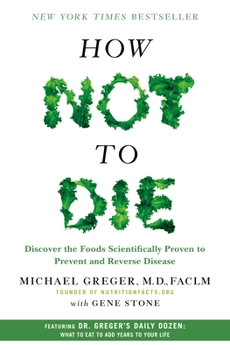
That question led me to Michael Greger’s How Not to Die. What I appreciated about the book was that it did not promise some dramatic secret. Instead, it helped me see that health begins with the choices we repeat every day. More than anything, it shifted the way I thought about eating. Health was no longer something built on sudden discipline or a perfect plan. It looked more like a daily pattern.
One of the most practical ideas in the book is that healthy eating should be measurable in simple, repeatable ways. Greger offers a framework that encourages people to include more whole, plant-based foods in everyday life. Not as a rigid rule, but as a reminder of what a nourishing day might look like.
The recommendations themselves are not flashy, but they are clear. Eat more beans. Include berries and other fruits. Make room for cruciferous vegetables and leafy greens. Choose whole grains more often. Add nuts and seeds. Use spices more intentionally. Move your body. In other words, the book does not center health around one miracle food. It builds health out of many ordinary foods that, together, create a better direction.
That was the part that stayed with me. So much of healthy eating is framed around restriction: what to cut out, what to avoid, what to stop craving. But How Not to Die also points toward a different way of thinking. Instead of only asking what should be removed, it invites us to ask what can be added.
That shift matters. For someone whose meals are rushed or inconsistent, it may be more realistic to begin by adding rather than eliminating. Add fruit to breakfast. Add something more whole and less processed. Add a handful of nuts. Add vegetables to a meal that would otherwise be empty of them. Add foods that feel closer to actual nourishment. This approach feels less like punishment and more like care.
Of course, no one follows these ideas perfectly every day. I do not think that is the point. What I took from the book was not the pressure to get everything right, but the reminder that health does not depend on perfection. It depends on direction. A healthy breakfast does not have to be impressive. It only has to move us, little by little, toward something better.
That is why I try not to think of breakfast as a performance anymore. It is not a test of discipline, and it does not need to look ideal. It is simply one of the first chances I get each day to treat my body with a little more respect. Even a small choice can matter: something less processed, something more substantial, something that gives rather than only fills.
In that sense, How Not to Die did not give me a final answer. It gave me a clearer way to think. A healthy breakfast is not protected by perfection, but by repetition. Not by grand intentions, but by ordinary choices we are willing to return to. And maybe that is enough for a beginning.
Meaning: This is serious. I am telling the truth. It is more intense, difficult, or real than you might think.
Why it is useful: This is the key expression of the episode. It sounds natural in everyday conversation and works well when you want to stress that something should not be underestimated.
Examples:
That hike is no joke. Bring extra water.
Her new job is no joke. She works incredibly long hours.
We got hit with another snowstorm, no joke.
2. Seriously
Meaning: I really mean it. This is true. Also used to react with surprise or emphasis.
Why it is useful: Very flexible and common. You can use it in many situations, from casual chats to emotionally charged conversations.
Examples:
He said he’s moving overseas. Seriously.
This coffee is amazing, seriously.
I’m seriously thinking about quitting that job.
3. I’m not kidding
Meaning: I am being completely honest. This is not a joke.
Why it is useful: Very natural when you think the other person may not believe you.
Examples:
She finished the whole project in one night. I’m not kidding.
You need to leave now. I’m not kidding.
That restaurant had a two-hour wait, I’m not kidding.
4. No lie
Meaning: Honestly. I’m telling the truth.
Why it is useful: This is casual and playful. It works well when you are excited, impressed, or sharing something surprising.
Examples:
That was the best burger I’ve had all year, no lie.
The traffic was insane, no lie.
He answered every question perfectly, no lie.
5. You’re not kidding
Meaning: I believe you now. You were absolutely right.
Why it is useful: This is especially good in conversation because it shows agreement and reaction. It helps the exchange feel more natural and connected.
Examples:
“This heat is brutal.” “You’re not kidding.”
“That application process was intense.” “You’re not kidding.”
“This coffee really is the best in town.” “You’re not kidding.”
Role play script from the conversation
Context: Two longtime friends are catching up over coffee.
A: This is the best coffee in the city. No lie. B: Okay, I’ll try it. You’re not kidding. So, how’s everything with Pauline? A: I haven’t talked to her since her divorce. No joke. B: Wow. That’s unbelievable. She’s always been hard to get in touch with. Seriously. A: Definitely. I hear she may be moving overseas. B: What? A: I’m not kidding.
A paragraph using all the expressions
I met my friend for coffee yesterday, and she told me this little café was the best in town, no lie. After my first sip, I looked at her and said, “You’re not kidding.” Then the conversation got more serious. She told me Pauline might be moving overseas, no joke, and I just stared at her. “Seriously?” I asked. She nodded and said, “I’m not kidding.” That whole conversation went from light and fun to surprisingly emotional in just a few minutes.
This is a very natural way to show that something became more meaningful, more serious, or more important over time.
Meaning: Something started as one thing, but it developed into something deeper or bigger.
Examples:
It was just a hobby, now it’s a passion.
It was just a podcast, now it’s a business.
It was just a house, now it’s a home.
It was just a conversation, now it’s a connection.
Why it’s useful: This pattern is elegant and emotional. Native speakers use it when reflecting on change and growth.
2. It became more than just a ___
This is a polished expression for saying something gained deeper meaning.
Meaning: It turned into something more valuable than it first seemed.
Examples:
Our weekly coffee meetup became more than just a routine.
Volunteering became more than just a social activity.
The running club became more than just exercise for me.
Why it’s useful: This expression is excellent for conversations about relationships, habits, work, and personal growth.
3. It stopped being just a ___
This is another strong way to describe a shift in meaning or role.
Meaning: Something no longer feels simple or basic because it has changed into something bigger.
Examples:
The group chat stopped being just a place to share updates.
The gym stopped being just a place to work out.
The project stopped being just a side job.
Why it’s useful: This sounds very natural in spoken English, especially when telling a story about how things evolved.
4. That’s a great question
A very common and useful reaction when someone asks something thoughtful.
Meaning: You are acknowledging that the question is interesting or meaningful.
Examples:
That’s a great question. I’d say it felt like home pretty quickly.
That’s a great question. I never thought about it that way.
That’s a great question. Let me think for a second.
Why it’s useful: This is a smooth, polite way to respond instead of answering too abruptly.
5. What do you mean?
A basic but extremely important conversation phrase.
Meaning: You want the other person to explain more clearly.
Examples:
It’s kind of taking over my life. What do you mean?
You said it changed everything. What do you mean?
You said it became a connection. What do you mean by that?
Why it’s useful: This keeps conversations going naturally and helps you sound engaged.
Role play script from the conversation
Here is the role play section they used, cleaned up and organized:
Role Play: Talking about a running club
A: What did you decide about the running club? B: I decided to join. A: Oh, nice. How’s it going? B: I like it, but it’s kind of taking over my life, to be honest. A: What do you mean? B: Well, at first it was going to be just Wednesdays, but they run every day and I have FOMO if I miss a meetup. A: Oh wow. It quickly became more than just a once-a-week thing. B: Yeah. It stopped being a once-a-week thing the moment I found out what I’d be missing. A: Well, the good news is you’re getting some amazing cardio in. B: Yeah, running is amazing cardio.
Paragraph using all the expressions
When I first joined the book club, it was just a hobby, now it’s a community. At the beginning, we only met once a month, but it became more than just a reading group because we started sharing personal stories and supporting each other. Eventually, it stopped being just a club and turned into one of the most important parts of my week. When people ask me why I love it so much, I usually say, “That’s a great question.” It’s hard to explain at first, but if someone looks confused, they’ll ask, “What do you mean?” and then I can tell them it’s really about connection, not just books.
Not your sleep score. Not your calories. Not even your step count.
Every morning, millions of people do the same thing.
They open their smartwatch app, look at their sleep score for two seconds, and instantly decide how they feel about themselves.
“76? Not bad.” “62? That explains a lot.” “91? I am, apparently, a superior life form.”
The problem is that sleep does not work like a report card.
A single number can be helpful, but it rarely tells the whole story. If you want to know whether you are actually sleeping well, and whether your sleep is supporting your brain, mood, and long-term health, there are three things worth checking before anything else.
Not because they are flashy. Not because they are trendy. But because they tell you what your body was really doing all night.
Here are the three things to look at on your smartwatch every morning.
Your smartwatch is useful, but it is not magic
First, a little perspective.
A smartwatch is not a sleep lab. It cannot replace a formal sleep study, and it cannot diagnose every sleep problem with perfect accuracy. Most watches estimate sleep using movement, heart rate, and sometimes blood oxygen data.
Still, they are incredibly useful.
A sleep lab gives you one night. A smartwatch gives you patterns over weeks and months.
And when it comes to sleep, patterns are often more revealing than a single number.
The goal is not to obsess over every small change. The goal is to notice what is becoming normal for you, especially when your sleep starts quietly drifting in the wrong direction.
1. Check your sleep duration and consistency
This is the least exciting metric, which is exactly why people ignore it.
Most people focus on how many hours they slept last night. That matters. But what matters almost as much is whether they are sleeping on a regular schedule.
Did you go to bed at roughly the same time as usual? Did you wake up at roughly the same time as usual? Or did your sleep schedule collapse into late-night scrolling, random snacks, and a personal rebellion against tomorrow morning?
Your body loves rhythm. Your brain loves rhythm. Hormones love rhythm.
When your bedtime and wake-up time swing wildly from day to day, your internal clock gets confused. And confused clocks tend to create confused mornings: grogginess, low energy, brain fog, irritability, and the feeling that coffee has somehow betrayed you.
When you check your smartwatch, look at more than just last night’s total. Pay attention to:
total sleep time
your average sleep time over the past week
bedtime consistency
wake-up consistency
One late night is not a disaster. But if your sleep keeps bouncing between 6 hours one night and 8.5 the next, or if your bedtime drifts all over the place, that inconsistency may be affecting you more than you realize.
You do not need perfect discipline. You just want a reasonably stable pattern. If your sleep and wake times stay within roughly the same one-hour window most days, that is usually a good sign.
Because good sleep is not only about getting enough of it. It is also about giving your body a predictable window to do its work.
2. Check your sleep graph, not just your sleep score
This is where the interesting part begins.
Most people see the sleep score and stop there. But if your app gives you a sleep stage graph, sometimes called a sleep timeline or hypnogram, that is where the real story usually lives.
A sleep graph shows how your night unfolded:
light sleep
deep sleep
REM sleep
brief awakenings
Think of it as a map of the night.
A score gives you a summary. A graph gives you shape.
And shape matters.
A fairly normal night often looks something like this: more deep sleep earlier in the night, more REM sleep toward the morning, and a few cycles repeating from bedtime to wake-up.
You may also notice brief awakenings. That surprises a lot of people. Many assume they never wake up during the night, then open the graph and discover tiny wake-ups sprinkled all over the place.
Usually, that is completely normal.
Sleep is not a coma. Brief awakenings happen. The question is not whether you woke up for a minute here or there. The question is whether the overall structure of the night still looks reasonably smooth.
When you look at your graph, ask yourself:
Does the night look mostly continuous or badly fragmented?
Is there some deeper sleep earlier on?
Do the sleep stages cycle in a natural-looking way?
Are awakenings brief and occasional, or constant and disruptive?
If the graph looks relatively smooth with a few interruptions, that is often fine.
If it looks like your nervous system spent the entire night arguing with itself, that is worth noticing.
3. Check for snoring, breathing issues, and oxygen trends
Now we get to the part many people ignore until it becomes impossible to ignore.
Snoring.
More specifically, what snoring might be trying to tell you.
A lot of people treat snoring like a joke. Something mildly annoying. Something your partner complains about. Something that gets blamed on being tired, older, or “just built that way.”
But snoring can sometimes be a clue that your breathing is becoming less stable during sleep.
And when breathing becomes unstable, sleep quality suffers. Not always dramatically. Sometimes very quietly, over time.
This is where your smartwatch can be surprisingly helpful.
Depending on your device, you may be able to see some combination of:
snoring detection
blood oxygen during sleep, often shown as SpO₂
breathing disturbances
respiratory rate
restless or broken sleep
You do not need to obsess over every number. Just look for patterns.
If your watch shows frequent snoring, repeated oxygen dips, or signs of fragmented sleep, that can be a clue that your breathing may be affecting your rest.
Oxygen saturation sounds more technical than it needs to be. In simple terms, it is a rough estimate of how much oxygen your blood is carrying while you sleep.
You do not need to stare at it all the time. The useful question is much simpler:
Does it seem stable night after night, or does it keep dipping along with snoring, fatigue, or poor sleep?
One strange night means very little. But if you keep seeing the same pattern, especially alongside loud snoring, dry mouth, morning headaches, or daytime sleepiness, it is worth paying attention.
A smartwatch cannot diagnose sleep apnea by itself. But it can give you an early clue that something may not be right.
And sometimes that early clue is the whole value.
So should you ignore the sleep score?
Not at all.
The sleep score is fine. It is useful as a quick summary. It can help you notice whether a night was better or worse than usual.
But it should not be the first thing you trust, and it definitely should not be the only thing you check.
Because when your score drops, the real question is not “How bad is this?”
The real question is “Why?”
And the answer usually lives in these three places:
how long and how consistently you slept
what your sleep graph looked like
whether breathing, snoring, or oxygen levels were disrupted
That is how you move from “my score was bad” to “I actually understand what happened.”
The best way to use a smartwatch for sleep
The smartest way to use a smartwatch is not as a judge, but as a mirror.
It is not there to shame you. It is there to show you patterns.
The people who get the most value from sleep tracking usually do a few things well. They look at weekly trends instead of panicking over one night. They connect their data to stress, alcohol, travel, exercise, and late meals. And they notice when something is gradually changing.
In other words, they use the watch to become observant, not obsessive.
That is a much healthier relationship with both sleep and technology.
Final takeaway
Before you get hypnotized by your sleep score, check these three things first:
1. Sleep duration and consistency Did you get enough sleep, and are your sleep and wake times reasonably stable?
2. Your sleep graph Does your night look structured, with natural cycles and decent continuity?
3. Snoring, breathing signals, and oxygen trends Are there clues that your breathing may be disturbing your sleep?
That is the real morning checklist.
Not because you need to turn your life into a spreadsheet.
But because better sleep usually does not come from one perfect night. It comes from paying attention, gently and consistently, until you start seeing what your body has been trying to tell you all along.
And sometimes, the most useful thing your smartwatch can say is not:
Meaning: You are handling something difficult bravely, patiently, or without complaining much.
Example:
“You came to work even though you’re still recovering? Wow, you’re a trooper.”
“She was sick all weekend but still helped with the event. She’s such a trooper.”
2. Knock on wood.
Meaning: We say this after mentioning good luck, hoping we do not jinx it.
Example:
“I haven’t gotten sick all winter, knock on wood.”
“My car hasn’t had any problems lately, knock on wood.”
3. Power through.
Meaning: To keep going even though something is hard, painful, or exhausting.
Example:
“I was exhausted, but I powered through the last hour of work.”
“Don’t power through serious pain. You should rest.”
4. The show must go on.
Meaning: Even when something goes wrong, you still need to continue.
Example:
“One of the dancers got injured, but the show must go on.”
“We had technical problems during the presentation, but the show must go on.”
5. Grit your teeth.
Meaning: To force yourself to endure pain, stress, or frustration.
Example:
“I just gritted my teeth and finished the meeting.”
“You don’t always have to grit your teeth. Sometimes it’s okay to ask for help.”
2. Role play script from the conversation
Situation: Two friends meet for lunch. One of them arrives with her arm in a sling.
Michelle: Oh no, Lindsay, what happened?
Lindsay: Oh, I sprained my wrist.
Michelle: Oh, I’m sorry.
Lindsay: Yeah, I worked through the pain. I had a meeting when it happened.
Michelle: Wow, you’re a trooper.
Lindsay: Thanks. So, how are you?
Michelle: Oh, just exhausted. I had two back-to-back night shifts, but I’m okay.
Lindsay: You’re a rock star, Michelle.
Michelle: I don’t know about that.
3. Paragraph using all the expressions
I haven’t been sick lately, knock on wood, but last week I sprained my wrist right before an important meeting. I tried to power through and told myself that the show must go on, but honestly, I was just gritting my teeth the whole time. My friend later said, “Wow, you’re a trooper,” which felt nice, but it also reminded me that sometimes being strong means knowing when to rest.
Q1: What does “I sprained my wrist” mean? A: It means I hurt my wrist by twisting or stretching it too much. It is not the same as I broke my wrist. Sprained means you hurt a joint, ligament, or muscle, while broken means a bone is broken.
Q2: What does “in a sling” mean? A: It means your arm is supported by a cloth strap because it is injured. Usually, we say my arm is in a sling, not my wrist is in a sling.
Example: “She came to lunch with her arm in a sling.”
Q3: What does “knock on wood” mean, and when do people use it? A: Knock on wood means I hope I don’t jinx it. People say it after mentioning something good, because they do not want bad luck to happen. It can sound like a small side comment or even a little self-talk.
Example: “I haven’t been sick this year, knock on wood.”
Sometimes people actually tap a wooden table, but it is also common to just say “knock on wood.”
What the Luddite movement can teach us about the age of artificial intelligence
AI is amazing.
It writes. It draws. It codes. It summarizes reports, creates music, designs images, and answers questions in seconds.
At first, it feels like magic.
Then, slowly, another feeling appears.
Fear.
Not the dramatic kind of fear we see in science fiction movies, where robots take over the world overnight. This fear is quieter. It sits somewhere in the back of our minds while we use ChatGPT, Midjourney, Claude, Gemini, or whatever new AI tool appears tomorrow.
It asks:
“If AI can do this, what happens to me?”
For writers, designers, translators, programmers, marketers, teachers, lawyers, accountants, and many others, this question feels personal.
Because AI is not just replacing muscle.
It is touching something we thought made us special: our intelligence, our creativity, our judgment, our ability to make meaning.
But this fear is not new.
About 200 years ago, workers in England felt something strangely similar. They were called Luddites. At night, they entered factories and smashed machines.
For a long time, history mocked them as foolish people who hated technology.
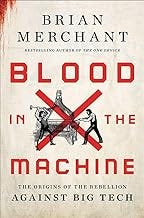
But Brian Merchant’s book, Blood in the Machine, tells a more interesting story.
The Luddites were not simply afraid of machines.
They were afraid of a world where machines created wealth, but ordinary people became poorer.
That is why their story matters today.
Because AI is not only a technology story.
It is also a story about power.
The Luddites Were Not Just “Anti-Technology”
When most people hear the word “Luddite,” they think of someone who hates new technology.
Someone who refuses to use a smartphone. Someone who still prints emails. Someone who says, “I don’t trust these new machines.”
But the real Luddites were not that simple.
The Luddite movement began in early 19th-century England, during the Industrial Revolution. Textile workers had spent years learning their craft. They knew how to make cloth with skill and care. Their hands were their livelihood. Their knowledge fed their families.
Then machines arrived.
New frames and looms could produce cloth faster and cheaper. Factory owners no longer needed as many skilled workers. They could hire lower-paid workers to operate machines and produce more goods at a lower cost.
To the factory owners, this was progress.
To the workers, it was disaster.
Their wages fell. Their bargaining power disappeared. Their skills lost value. Their future became uncertain.
So they fought back.
They broke the machines that were being used to destroy their livelihoods.
That is the part history often remembers.
But the deeper question they asked is often forgotten:
“If machines create more wealth, why are the workers becoming poorer?”
This is the heart of the Luddite story.
They were not fighting technology itself. They were fighting the way technology was being used.
They were fighting a system where the benefits went upward, while the pain stayed with ordinary workers.
AI Is the New Machine
The machines of the Industrial Revolution replaced human hands.
AI is different.
AI reaches for the human mind.
A loom could weave fabric. AI can write an essay.
A spinning frame could produce thread. AI can produce code.
A factory machine could speed up physical labor. AI can speed up thinking, planning, designing, translating, analyzing, and creating.
That is why today’s anxiety feels so wide.
It is not only factory workers who feel threatened.
Writers wonder if their words will still matter. Artists wonder if their style has already been copied. Programmers wonder if junior coding jobs will disappear. Teachers wonder how students will learn when AI can answer everything. Lawyers and accountants wonder how much of their work can be automated. Office workers wonder whether “productivity” is just another word for needing fewer people.
The question is not always:
“Will AI completely replace me?”
The scarier question is:
“Will AI make my work less valuable?”
That is exactly the kind of fear the Luddites felt.
Their craft did not disappear overnight. But its value was attacked. What once required skill, time, and experience could suddenly be made cheaper by machines.
Today, many knowledge workers feel the same shock.
What once took hours can now take seconds.
And when something becomes faster and cheaper, people naturally ask:
“What happens to the person who used to do that work?”
History Does Not Repeat Exactly. But the Questions Return.
History does not copy and paste itself.
We are not living in 1812. We are not textile workers in England. We are not breaking into factories at night with hammers.
But human fear has a way of returning in new clothes.
First, we are amazed by technology.
Then, we are excited by what it can do.
Then, we start to notice who benefits.
That is when the fear begins.
Technology always has two faces.
For some people, it is opportunity. For others, it is a threat.
The Industrial Revolution created enormous wealth. It increased production, lowered the cost of goods, and changed the world. But for many workers living through it, progress did not feel like progress. It felt like losing control over their lives.
AI may follow a similar pattern.
It can help doctors diagnose diseases. It can help students learn. It can help small businesses do more with less. It can help people write, build, research, and create faster than ever before.
But it can also concentrate wealth. It can weaken labor. It can pressure wages. It can use creative work without fair recognition. It can turn human skill into a cheap button.
So the most important question is not:
“Is AI good or bad?”
A better question is:
“Who benefits when AI becomes powerful?”
The Real Problem Is Not AI. It Is Ownership.
AI itself does not decide who gets rich.
People do.
Companies do.
Markets do.
Governments do.
Institutions do.
That is why the real issue is not only what AI can do, but who owns it, who controls it, and who profits from it.
If AI allows a company to produce more with fewer workers, where does the extra profit go?
Does it go to employees? Does it go to customers? Does it go to artists and writers whose work helped train the models? Does it go to society through taxes and public services? Or does it mostly go to shareholders and a small number of powerful technology companies?
This is where the Luddite question becomes modern again.
The Luddites asked:
“If machines create wealth, who should receive that wealth?”
Today, we must ask:
“If AI creates wealth, who should receive that wealth?”
This question matters more than ever because AI is not just another tool.
It is becoming infrastructure.
It may shape how we work, learn, search, communicate, create, and make decisions. When a technology becomes that powerful, leaving everything to the market is not neutral. It is a choice.
And often, that choice favors those who already have power.
We Do Not Need Hammers. We Need Better Questions.
The Luddites picked up hammers.
We need something else.
We need questions.
Not because questions are soft, but because questions shape laws, policies, companies, schools, and public debate.
We should ask:
How should the wealth created by AI be shared?
How should artists, writers, and creators be compensated when their work trains AI systems?
How do we help workers whose jobs are changed or weakened by automation?
What decisions should never be fully handed over to machines?
What should humans remain responsible for?
How do we make sure AI serves people instead of simply replacing them?
These questions are not anti-technology.
They are pro-human.
They do not say, “Stop AI.”
They say, “Do not let AI become another machine that creates wealth for a few while making everyone else more insecure.”
That is the lesson of the Luddites.
They failed to stop the Industrial Revolution.
But their question survived.
What Remains Human in the Age of AI?
As AI becomes more capable, we may need to rethink what human value means.
For a long time, many of us believed our value came from being productive.
How much can we write? How fast can we code? How many designs can we make? How many reports can we complete?
But AI is very good at speed.
It can produce more than we can. It can work longer than we can. It does not get tired, bored, or anxious.
So if we compete with AI only on speed and output, we may lose.
But humans are not only output machines.
Humans ask why. Humans care about meaning. Humans feel responsibility. Humans understand pain, dignity, trust, and consequence. Humans can decide that just because something is efficient does not mean it is right.
AI can generate answers.
But humans must decide which questions matter.
AI can write a sentence.
But humans must decide whether that sentence is honest, kind, useful, or harmful.
AI can analyze data.
But humans must decide what values should guide the use of that analysis.
In the age of AI, the most important human skills may not only be technical skills.
They may also be empathy, ethics, judgment, imagination, communication, and responsibility.
The smarter machines become, the more human we may need to become.
The Question From 200 Years Ago Is Back
Brian Merchant’s Blood in the Machine makes the Luddites feel less like a strange group from the past and more like a warning from history.
Two hundred years ago, workers looked at machines and feared that their skills would no longer matter.
Today, we look at AI and wonder whether our knowledge, creativity, and judgment will still matter.
They heard the sound of factory machines.
We hear the quiet hum of servers.
They watched their craft lose value.
We watch AI generate work that once required years of training.
They asked:
“What happens to us?”
We are asking the same thing.
The lesson of the Luddites is not that we should smash machines.
The lesson is that we should pay attention when technology creates wealth but people feel poorer, weaker, and more replaceable.
AI may become one of the most powerful tools humanity has ever built.
But tools do not automatically create justice.
People do.
Laws do.
Institutions do.
Collective choices do.
So maybe the question is not whether AI will change the world.
It already is.
The real question is:
Who will AI change the world for?
Two hundred years ago, people smashed machines because they felt no one was listening.
Today, we still have a chance to listen before the fear turns into something louder.
We do not need to fight AI.
But we do need to decide what kind of future AI is allowed to build.
When people prepare for interviews, they often end up doing one thing over and over again: trying to present themselves as impressively as possible.
You start polishing your achievements. You make your impact sound sharper. You try to sound more confident, more accomplished, more complete.
And without noticing it, interview preparation can slowly become an exercise in self-promotion.
But after doing enough interviews, either as a candidate or as an interviewer, you begin to notice something else.
An interview is not only a place to prove that you are capable. It is also a place where people imagine what it would feel like to work with you.
That is why the people who leave the strongest impression are not always the ones with the flashiest stories. Sometimes they are the ones who make you think:
“This person feels honest.” “They do not pretend to know everything.” “They seem easy to work with.” “If something goes wrong, they probably will not turn defensive or blame others.”
In the end, what matters in an interview is not just whether you can make yourself look impressive. It is whether you can make someone trust you as a future teammate.
Looking impressive is not the same as feeling trustworthy
Interviews make almost everyone tense.
And when people get tense, they usually move in one of two directions.
Some people shrink. They downplay what they have done, speak too cautiously, and fail to show the real value of their work.
Others go the opposite way. They exaggerate. They talk about team achievements as if they were individual wins. They describe messy learning experiences as if they had known the right answer from the beginning.
Both reactions are understandable. An interview is, after all, an evaluation.
But from the interviewer’s side, the more convincing person is often neither the quietest nor the most polished. It is usually the person who can clearly say what they did, what they did not know, and what they learned along the way.
Take failure, for example.
One candidate may try to hide the mistake and move quickly to the recovery. Another may say something like this:
At the time, I was looking at the problem too narrowly from a technical perspective. What mattered more was the user impact, and I realized that too late. After that, I changed how I prioritize problems. Now I start by clarifying who is affected and how.
That answer is not dramatic. It does not try to sound brilliant. But it feels solid.
Why? Because it shows self-awareness. It shows honesty. It shows that the person is not only reporting outcomes, but also reflecting on judgment.
And that kind of reflection tends to build trust faster than polished confidence.
An interview is not only a test of skill. It is also a test of collaboration.
Most people treat interviews as skill assessments. That makes sense. Skill matters.
But interviewers are usually evaluating more than technical ability.
They are also asking themselves quieter questions.
What happens when this person disagrees with someone? Can they explain their thinking clearly? Do they listen? Will they be constructive under pressure? Do they take ownership, or do they protect themselves first? Would this person make the team better to work with?
That is why attitude shows up so strongly in interviews, even when no one says it directly.
For example, when talking about a project, there is a big difference between these two styles:
“I built the whole thing myself.”
and
“I led this part, a teammate owned another major part, and we had to work through a disagreement about priorities before we moved forward.”
The second answer does more than describe work. It reveals how the person works with other people.
And in most real jobs, that matters just as much as individual brilliance.
A strong interview is not only about saying, “Here is why I am good.” It is about showing, “Here is what it feels like to solve problems with me.”
That difference matters more than many people realize.
What interviewers look for changes by level
Another thing that often gets overlooked is that not every interview is asking for the same kind of signal.
The qualities that matter in a junior interview are not the same ones that matter in a senior or principal interview.
The question may sound similar, but the expected depth is different.
Junior: potential, learning, and coachability
For junior candidates, interviewers are rarely looking for a finished product.
They are not expecting complete mastery. They are trying to understand whether this person can grow in a healthy direction.
That usually means looking for things like:
Can this person learn quickly? Can they take feedback without collapsing or getting defensive? Do they have solid fundamentals? Can they follow through? Do they know when to ask for help?
Because of that, junior candidates do not need to force every answer into a story of huge impact. What often matters more is how they learn.
A strong junior answer sounds something like this:
At first, I misunderstood the root cause. After reviewing the logs again and asking for help, I realized I had locked onto my first assumption too quickly. Since then, I have tried to separate what I know from what I think I know before jumping into a fix.
That answer is not trying to sound heroic. It is showing a healthy growth pattern.
And that is often what interviewers want to see at the junior level.
A junior interview is not mainly about how much you have already done. It is about whether you look like someone who will keep getting better.
Senior: independence, judgment, and impact
At the senior level, the bar changes.
Now it is not enough to be a strong executor. You are expected to create clarity where things are ambiguous, make decisions with incomplete information, and move work forward across people and priorities.
Interviewers are often looking for independence and leverage.
Can this person define the real problem, not just respond to the surface request? Can they make tradeoffs? Can they coordinate with others effectively? Can they improve outcomes beyond their own individual tasks?
That means a strong senior answer usually includes more than implementation details.
It explains:
Why the problem mattered. How priorities were set. What tradeoffs were considered. Who needed alignment. What changed because of the work.
For example:
The original request was framed as a feature gap, but after digging in, it became clear that the bigger issue was inconsistent data quality. I suggested we align on definitions first instead of immediately building on top of unstable assumptions. It looked slower in the short term, but it reduced repeated issues later and gave other teams a shared foundation too.
That answer shows more than competence. It shows judgment. It shows the ability to reframe a problem and create broader impact.
That is what senior-level interviews are usually trying to surface.
A senior person is not just someone who does good work. It is someone who helps make good work happen.
For roles beyond senior level: direction, systems thinking, and organizational influence
For roles beyond senior level, the frame shifts again.
The conversation is no longer mainly about whether you can solve difficult problems yourself. It is about whether you can shape how an organization solves problems.
Now the scope is larger. The timelines are longer. The tradeoffs are more complex.
Interviewers may be looking for signs like these:
Can this person think across teams, not just within one area? Can they connect technical decisions to organizational consequences? Can they create alignment without relying on direct authority? Can they build systems, principles, or structures that continue working even after they step away?
A strong principal answer often sounds different from a senior one.
It is less about “Here is the decision I made,” and more about “Here is the environment I helped create so that better decisions could happen consistently.”
For example:
What looked like a performance issue at first turned out to be a coordination problem across teams with different operating assumptions. Instead of optimizing one service in isolation, we introduced a shared decision framework and common reliability standards. That reduced repeated debates and helped teams make faster, more consistent tradeoffs on their own.
That is not just problem-solving. That is organizational design.
This level candidate is not only expected to bring answers. They are expected to help the organization produce better answers over time.
The same question carries different weight at different levels
Imagine the question: “What is the hardest problem you have solved?”
A junior candidate should probably focus on how they approached it, where they got stuck, what they learned, and how they improved.
A senior candidate should probably talk about problem definition, prioritization, collaboration, tradeoffs, and measurable impact.
A principal candidate should probably go one level higher and explain why the problem mattered at an organizational level, what long-term change came out of it, and how it shaped systems beyond one immediate win.
The wording of the question may stay the same. But the expected layer of thinking changes.
And this is where many candidates struggle.
A junior candidate may try too hard to sound strategic and forget to explain what they actually did. A senior candidate may spend too much time on implementation detail and not enough on judgment or influence. A principal candidate may tell strong execution stories without showing organizational direction.
That is why interview preparation is not just about practicing answers. It is about understanding what the role is really asking you to represent.
In the end, interviews leave an impression of a person, not just an answer
After an interview is over, most people do not remember every sentence.
What they remember is the shape of the person.
They remember whether you seemed grounded. Whether you sounded honest. Whether you gave credit to others. Whether your thinking felt mature. Whether it was easy to imagine working with you.
That is why the strongest interviews often do not feel like performances. They feel like clear windows into how someone works.
Not perfect. Not over-rehearsed. Just clear.
I think that is what many candidates miss when they prepare only for “good answers.”
Good answers matter, of course. But answers alone do not create trust.
What creates trust is something deeper: a sense that you understand yourself, your work, your strengths, your limitations, and the way you show up on a team.
When someone can speak from that place, the interview becomes less about selling and more about clarity.
I work this way. This is where I am strongest. This is where I have made mistakes. This is how I have changed. This is the kind of teammate I try to be.
Those are not flashy ideas. But they are often the ones that stay with people.
Interview preparation is really a form of self-understanding
This is why I think interview preparation is more personal than most people admit.
At its best, it is not just about learning how to answer common questions. It is about finding language for who you are at work.
What kinds of environments help you do your best work? What kinds of people bring out your strengths? What situations make you defensive? What kind of contribution do you make repeatedly? What values show up in the decisions you make?
These are not typical interview prep questions. But they may matter more than most of the tactical ones.
When people do not understand themselves well, they tend to reach for impressive-sounding language. When they do understand themselves, their answers often become simpler and more believable.
And interviewers can usually feel the difference.
So before trying to sound sharper, bigger, or more polished, it may be worth doing something harder: understanding yourself more clearly.
Because in the end, a good interview is not only about whether you can answer well. It is also about whether another person can see you clearly enough to trust working with you.
A book worth reading is not one about interview tricks, but one that helps you reflect on yourself
There are many books that teach interview tactics. Some are useful. They can help with structure, communication, and confidence.
But sometimes a more helpful book is not one that teaches you how to perform better. It is one that helps you think more honestly about who you are.
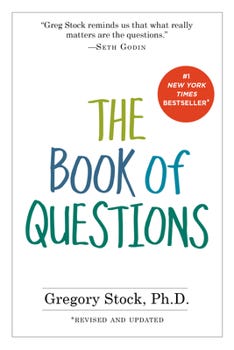
That is why a book like The Book of Questions by Gregory Stock feels relevant here.
It is not an interview book. It does not teach you how to answer behavioral questions or negotiate an offer.
Instead, it asks questions that make you reflect on your values, fears, choices, relationships, and inner contradictions.
And that kind of reflection may actually be closer to the heart of good interviewing than most advice books are.
Because strong interviews do not begin with polished answers. They begin with self-knowledge.
Not: “What sounds impressive?” But: “What do I actually believe?” “What kind of person am I when I work with others?” “What matters to me?” “What am I still learning about myself?”
Maybe that is what interview preparation really is, at its deepest level.
Not just preparing to be chosen. But understanding more clearly what kind of person you are becoming at work.
 Site Title