We often treat emotions like bad weather.
Anger? Hide it.
Sadness? Fix it fast.
Jealousy? Pretend it is not there.
Fear? Push through it.
We learn to smile when we are hurt.
We say “I’m fine” when we are not fine at all.
We try to be strong by becoming quiet.
But emotions do not disappear just because we ignore them.
They wait.
They grow.
And one day, they come out in strange ways.
Maybe we snap at someone we love.
Maybe we disappear into our room.
Maybe we keep working, scrolling, eating, or pretending.
Maybe we blame ourselves and wonder, “Why am I like this?”
That is why the title Permission to Feel is so powerful.
It does not say, “Control your feelings.”
It does not say, “Defeat your feelings.”
It says: You are allowed to feel.
And maybe that is where healing begins.
Imagine Wearing an Emotion Watch
Imagine you had a small watch on your wrist.
Not a fitness watch.
Not a step counter.
An emotion watch.
When your heart feels heavy, it gently lights up and says:
Anger: 60%
Sadness: 25%
Fear: 10%
Loneliness: 5%
At first, it might feel strange.
“Wait, I’m not angry? I’m lonely?”
“I’m not just tired? I’m disappointed?”
“I’m not being dramatic? I’m hurt?”
Most of us are not very good at naming our emotions.
We say, “I feel bad.”
But “bad” is not one feeling.
Bad can mean ashamed.
Bad can mean rejected.
Bad can mean jealous.
Bad can mean afraid.
Bad can mean exhausted.
When we do not know the name of the feeling, we do not know what to do with it.
That is why an emotion watch would be useful.
Not because it solves everything.
But because it helps us pause and ask:
“What is actually happening inside me?”
Feelings Are Information
This is one of the biggest lessons from Permission to Feel.
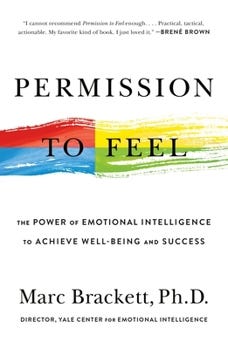
Emotions are not problems.
They are information.
Anger may be saying, “A boundary was crossed.”
Sadness may be saying, “You lost something important.”
Jealousy may be saying, “You want something too.”
Fear may be saying, “You need safety.”
Loneliness may be saying, “You need connection.”
A feeling is like a knock on the door.
If we never open the door, the knocking gets louder.
But if we pause and listen, we may discover something important about ourselves.
Instead of asking,
“How do I stop feeling this?”
we can ask,
“What is this feeling trying to tell me?”
That one question can change everything.
Morrie Did Not Run Away From His Feelings
This is where Morrie Schwartz enters the story.
Morrie is the beloved professor from Tuesdays with Morrie and Morrie: In His Own Words.
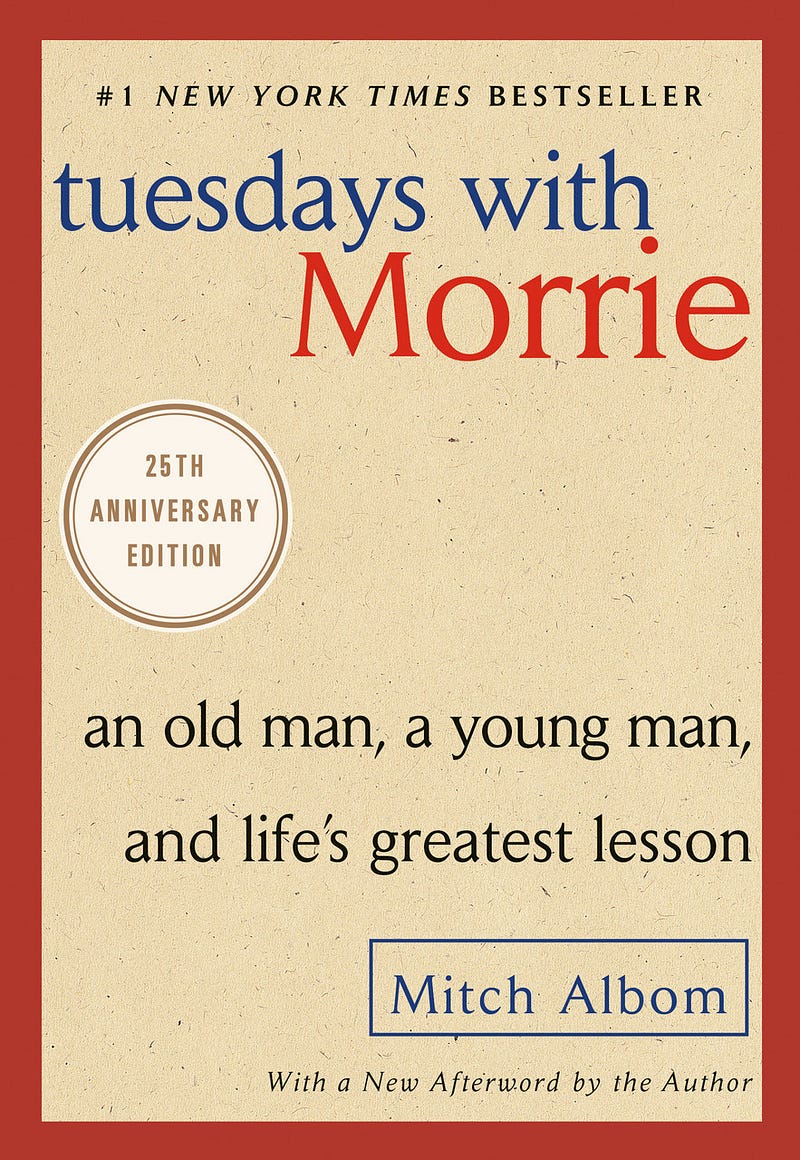
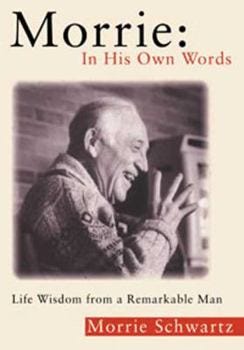
Both books are about life, death, love, and what really matters.
But they feel different.
Tuesdays with Morrie is told through the eyes of Mitch Albom, Morrie’s former student. Mitch visits Morrie every Tuesday while Morrie is dying from ALS. Through these visits, Mitch slowly learns that success, money, and fame are not the center of life.
Morrie: In His Own Words feels more like Morrie speaking directly to us. It is shorter, simpler, and more like a final notebook of wisdom. In the video transcript, this difference is described clearly: Tuesdays with Morrie feels like a student watching his teacher face death, while Morrie: In His Own Words feels like Morrie’s own lecture notes and final teachings.
What makes Morrie powerful is not that he was always calm.
He was not a superhero.
He was not emotionless.
He was not above fear.
He was losing control of his body.
He needed help.
He knew death was coming.
Of course he felt fear.
Of course he felt frustration.
Of course he felt sadness.
But Morrie did something many of us avoid.
He looked at his feelings honestly.
He did not pretend everything was okay.
He did not hide behind fake positivity.
He complained when he needed to complain.
He cried when he needed to cry.
He asked for help when he needed help.
That is emotional courage.
Being Strong Does Not Mean Feeling Nothing
Many people think strength means staying calm all the time.
Never cry.
Never complain.
Never need anyone.
Never fall apart.
But Morrie teaches a different kind of strength.
Real strength is not the absence of emotion.
Real strength is knowing what you feel, expressing it in a healthy way, and returning to love.
That is very different.
If you are angry, you do not need to destroy someone with your anger.
But you also do not need to bury it inside your chest.
You can say:
“I’m angry.”
“I felt ignored.”
“I think I was hurt.”
“I need to talk about this.”
That is not weakness.
That is emotional honesty.
And emotional honesty can save relationships.
Because often, anger is not just anger.
Under anger, there may be hurt.
Under hurt, there may be fear.
Under fear, there may be love.
We shout because we wanted to be heard.
We cry because something mattered.
We feel jealous because we wanted to be chosen.
We feel sad because we loved.
At the bottom of many emotions, there is love.
“Do I Want to Die, or Do I Want This Pain to End?”
One of the deepest ideas connected to Morrie’s teaching is this question:
“Do I really want to die forever, or do I just want this moment of pain to end?”
That question is gentle but powerful.
Sometimes people say, “I want to die,” when what they really mean is:
“I don’t want to feel this pain anymore.”
“I don’t know how to carry this loneliness.”
“I want this shame to stop.”
“I need help.”
“I want to live, but not like this.”
That difference matters.
When we name the real feeling, the darkness becomes a little less blurry.
“I want to disappear” may become,
“I feel deeply ashamed.”
“I can’t do this anymore” may become,
“I am exhausted and need support.”
“Nobody cares” may become,
“I feel lonely and unseen.”
Naming the feeling does not magically solve everything.
But it gives us a handle.
And sometimes, a handle is enough to open a door.
Death Makes Life Clearer
Morrie often said that learning how to die helps us learn how to live.
That sounds sad at first.
But it is actually full of life.
When we remember that life is limited, we begin to see what matters.
Not every argument matters.
Not every achievement matters.
Not every opinion matters.
But love matters.
Forgiveness matters.
Saying “thank you” matters.
Saying “I’m sorry” matters.
Telling someone “I love you” before it is too late matters.
Many people do not regret failing to buy more things.
They regret not saying what was in their heart.
They regret being too proud.
Too busy.
Too afraid.
Too silent.
Death asks us a simple question:
“What will you wish you had said?”
And life gives us a chance to say it now.
We All Need an Emotion Watch — Until We Don’t
At first, we may need help seeing our feelings.
A book can be an emotion watch.
A journal can be an emotion watch.
A therapist can be an emotion watch.
A trusted friend can be an emotion watch.
Prayer, meditation, walking, or music can also become emotion watches.
They help us notice what we could not notice alone.
But the final goal is not to depend on a watch forever.
The goal is to build that watch inside ourselves.
To pause and say:
“Something is happening in me.”
“I should not ignore it.”
“I should not let it control me either.”
“I can listen to it.”
“I can learn from it.”
“I can choose what to do next.”
That is emotional maturity.
Not perfect calm.
Not fake happiness.
Not pretending to be okay.
Just the quiet skill of noticing your own heart.
The Feeling Is Not the Enemy
So maybe emotions are not enemies.
Maybe anger is not here to ruin us.
Maybe sadness is not here to weaken us.
Maybe fear is not here to shame us.
Maybe jealousy is not proof that we are bad.
Maybe emotions are messengers.
They knock on the door and say:
“Look here.”
“This matters.”
“You are hurt.”
“You need rest.”
“You need love.”
“You need to speak.”
“You need to let go.”
And if we listen carefully, emotions can lead us back to life.
Permission to Feel teaches us to name our feelings.
Morrie teaches us to express them, accept them, and still choose love.
Together, they remind us of something simple:
We do not become human by defeating our emotions.
We become human by understanding them.
So today, instead of asking,
“How do I stop feeling this?”
try asking:
“What is this feeling trying to tell me?”
That small question may be the beginning of a much more honest life.
 Site Title