How to turn emotion into odds, risk, and better bets
Most people imagine a “rational person” as someone cold.
No emotions.
No hesitation.
No excitement.
Just pure logic, spreadsheets, and perfect decisions.
But real life does not work like that.
When you are choosing a career, building a company, launching a product, taking a risk, or saying yes to a big opportunity, emotions are always there.
You feel excited.
You feel scared.
You feel pressure.
You feel that little voice saying, “What if this changes everything?”
The problem is not that we feel emotions.
The problem is when we let emotions make the final decision.
A better way is not to kill your feelings.
A better way is to translate them.
Turn excitement into probability.
Turn fear into risk.
Turn desire into opportunity cost.
Turn uncertainty into a better bet.
That is what truly rational decision-making looks like.
Life Is More Like Poker Than Chess
A lot of people think good decisions are like chess.
You study the board.
You calculate the moves.
You make the best play.
If you are smart enough, you win.
But life is not chess.
Life is more like poker.
In poker, you can make the right move and still lose.
You can make a bad move and still get lucky.
A great hand can fail.
A terrible hand can win.
That sounds unfair, but it is also freeing.
It means one bad result does not always mean you made a bad decision.
And one good result does not always mean you were a genius.
This idea is one of the most useful lessons from Thinking in Bets by Annie Duke.
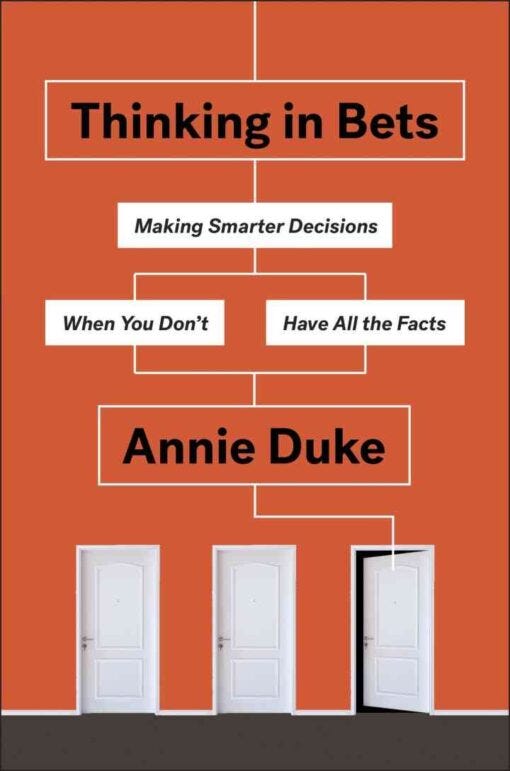
The core message is simple:
Do not judge a decision only by its outcome. Judge it by the quality of the thinking behind it.
That one idea can save you from a lot of pain.
Because if you only look at results, you will constantly learn the wrong lessons.
You might say, “That worked, so I should do it again,” even though you just got lucky.
Or you might say, “That failed, so I should never try that again,” even though the decision was smart and the timing was just bad.
The better question is:
Given what I knew at the time, was this a good bet?
That question changes everything.
Emotion Is a Signal, Not a Strategy
Let’s say a big opportunity appears.
A new job.
A major client.
A startup idea.
A partnership.
A chance to move to a new city.
A project that feels exciting but risky.
Your first reaction matters.
Excitement is useful.
Fear is useful.
Curiosity is useful.
Even jealousy can be useful.
Emotions tell you where to look.
But they should not be allowed to drive the car.
Imagine your excitement says:
“This could be huge.”
Great. Listen to it.
Then ask:
“How likely is it to actually happen?”
“What would I need to give up?”
“What happens if I am wrong?”
“What happens if I am right?”
“Is this aligned with where I want to go?”
Now your emotion has become information.
That is the trick.
A bad decision-maker says:
“I want this, so I will do it.”
A better decision-maker says:
“I want this. Now let me understand the odds.”
The Most Expensive Word Is “Yes”
Most people think bad decisions come from saying yes to bad things.
But many bad decisions come from saying yes to good things.
That is the dangerous part.
A good client.
A good job.
A good idea.
A good feature.
A good opportunity.
Each one looks harmless.
But every “yes” has a hidden cost.
If you say yes to one client, you may say no to your product roadmap.
If you say yes to one feature, you may say no to simplicity.
If you say yes to stability, you may say no to growth.
If you say yes to excitement, you may say no to peace.
This is called opportunity cost.
It is the thing you lose when you choose something else.
And it is usually invisible.
That is why the best decision-makers do not only ask:
“Is this a good opportunity?”
They ask:
“What does this opportunity force me to give up?”
That question is painful.
But it is powerful.
Because focus is not about choosing good things.
Focus is about rejecting good things that are not important enough.
Don’t Build the Castle Before You Check If Anyone Wants to Live There
One of the biggest mistakes people make is building too much before testing.
They get an idea.
Then they disappear for six months.
They build the product.
They polish the design.
They add more features.
They prepare the launch.
They make the logo perfect.
Then they finally show it to the world.
And the world says:
“Cool.”
But nobody buys.
This is why The Lean Startup is such an important book.
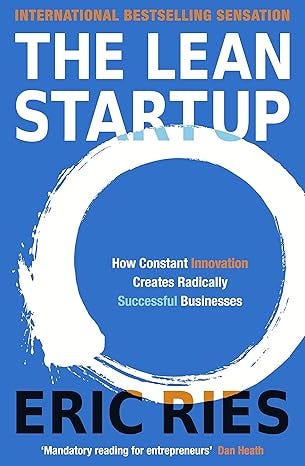
Its message is not “build something small because small is cute.”
Its message is:
Learn before you waste your life building the wrong thing.
The goal is not to create the perfect product.
The goal is to test the riskiest assumption as fast as possible.
Do people actually have this problem?
Is the problem painful enough?
Are they already trying to solve it?
Would they pay for a better solution?
Would they change their current behavior?
Praise is not proof.
People saying “great idea” is not proof.
People liking your post is not proof.
People joining a waitlist is a little better.
People paying is much better.
People using it again and again is the real signal.
Compliments are cheap.
Commitment is expensive.
So before building the castle, check if anyone wants to live there.
Customers Usually Ask for the Wrong Thing
This sounds rude, but it is true.
Customers are very good at describing pain.
They are not always good at designing the solution.
A customer may say:
“Can you add this button?”
“Can you build this feature?”
“Can you change this screen?”
“Can you add this option?”
A beginner hears that and immediately starts building.
An expert asks:
“Why?”
Why do you need that button?
What are you trying to do?
Where are you getting stuck?
What happens before this step?
What happens after it?
What would success look like?
The customer’s request is not the answer.
It is a clue.
If you follow every request, your product becomes a junk drawer.
A button here.
A setting there.
A dashboard nobody opens.
A feature that solves one tiny case but makes everything else worse.
Great products are not built by blindly obeying customers.
Great products are built by deeply understanding customers.
There is a huge difference.
Listen carefully.
Care deeply.
But do not become a waiter taking feature orders.
Become a detective.
Find the real problem under the request.
Small Teams Win by Caring More
Big companies have advantages.
They have brand names.
They have money.
They have large teams.
They have long feature lists.
They have trust.
Small teams cannot beat them by pretending to be big.
They win by being different.
They listen faster.
They respond faster.
They fix things faster.
They care in a way that feels personal.
This is one of the strongest ideas behind Delivering Happiness.
Customers do not only buy products.
They buy trust.
They buy safety.
They buy the feeling that someone will care when things go wrong.
This matters even more when the product is important.
If your software handles invoices, operations, logistics, healthcare data, payments, or anything mission-critical, customers are not just asking:
“Does this feature work?”
They are asking:
“Can I trust you with something important?”
That trust is not built through marketing copy.
It is built through behavior.
Answering quickly.
Listening carefully.
Fixing problems.
Telling the truth.
Showing up when it is inconvenient.
A small team can win against a giant when the customer feels:
“These people actually care about our problem.”
That feeling is not small.
It is a competitive advantage.
Ask for Advice Before Your Ego Gets Loud
Good decision-makers ask for advice.
Not because they are weak.
Because they know their own brain is biased.
We all bend reality in our favor.
We overvalue ideas we love.
We underestimate risks we do not want to see.
We keep investing in things because we already spent time on them.
We confuse confidence with clarity.
That is why outside perspective matters.
A good advisor does not simply tell you what to do.
A good advisor helps you think better.
They ask:
“What would make this fail?”
“What are you assuming?”
“What are you ignoring?”
“What would you do if you had not already spent six months on this?”
“What does the opposite argument look like?”
Those questions can hurt.
But they sharpen your thinking.
The point of advice is not to outsource your decision.
The point is to clean the window before you look through it.
The Best Career Choice Is Not Always the Safest One
Career decisions are emotional because they are personal.
Should you take the stable job?
Join the startup?
Start your own thing?
Stay where you are?
Move somewhere new?
Choose money?
Choose learning?
Choose peace?
Choose ambition?
There is no universal answer.
A great choice for one person can be a terrible choice for another.
The better question is not:
“What looks best on paper?”
The better question is:
“Where can I keep showing up with energy?”
Some people work nine hours a day and feel drained.
Some people work constantly and feel alive.
The difference is not just workload.
The difference is ownership.
When something feels like yours, effort feels different.
Still, passion alone is not enough.
You need to ask:
“What is the upside?”
“What is the downside?”
“Can I survive the downside?”
“What will I learn even if this fails?”
“Is this risk right for this season of my life?”
A smart risk is not reckless.
A smart risk is a bet where the upside is meaningful, the downside is survivable, and the learning is valuable.
When Things Get Emotional, Return to the Questions
Big goals create big emotions.
One morning, everything feels amazing.
Two hours later, everything feels broken.
A customer changes their mind.
A deal gets delayed.
A teammate leaves.
A launch fails.
A competitor moves faster.
A plan that looked perfect suddenly looks stupid.
This is normal.
The danger is making permanent decisions during temporary emotional storms.
When something bad happens, do not immediately rewrite your entire strategy.
When something good happens, do not immediately assume you are unstoppable.
Return to the questions.
“What actually changed?”
“Is this a signal or just noise?”
“Am I reacting to fear?”
“Am I reacting to excitement?”
“What are the odds now?”
“What should I do next?”
Calm is not the absence of emotion.
Calm is the ability to come back to clear thinking after emotion hits.
That is a skill.
And like any skill, it gets better with practice.
A Simple Framework for Better Decisions
Here is a simple way to make better decisions when things feel uncertain.
First, name the emotion.
Are you excited? Afraid? Pressured? Proud? Impatient?
Second, turn the emotion into a question.
Excitement becomes: “What is the real upside?”
Fear becomes: “What is the actual downside?”
Pressure becomes: “What happens if I wait?”
Desire becomes: “What am I willing to give up?”
Third, estimate the odds.
You do not need perfect math.
You just need to stop thinking in vague words like “probably” and “maybe.”
Try numbers.
Is this 10% likely?
40% likely?
80% likely?
Even rough numbers make your thinking clearer.
Fourth, check the opportunity cost.
What will this decision steal time, focus, money, or energy from?
Fifth, test reality.
Can you run a small experiment?
Can you talk to customers?
Can you ask for commitment?
Can you build a tiny version first?
Sixth, review the decision later.
Do not only ask, “Did it work?”
Ask:
“Was the thinking good?”
That is how you improve.
Final Thought: Stop Trying to Be Right Every Time
The goal is not to be right every time.
That is impossible.
The goal is to make better bets.
Again and again.
A good life is not built from one perfect decision.
A good company is not built from one perfect idea.
A good career is not built from one perfect move.
It is built from repeated decisions that slowly get better.
So the next time you face a big choice, do not ask:
“How do I know for sure?”
You probably cannot.
Ask this instead:
“Is this a good bet, based on what I know right now?”
Then look at the odds.
Look at the cost.
Look at the risk.
Look at the customer.
Look at the reality, not just the fantasy.
Let your emotion point you somewhere.
But let your thinking decide whether to go.
That is how smart decisions are made.
Not by becoming cold.
But by becoming clear.
 Site Title