10 Thinking Lessons from Yale Professor Woo-Kyoung Ahn’s 『Thinking 101』
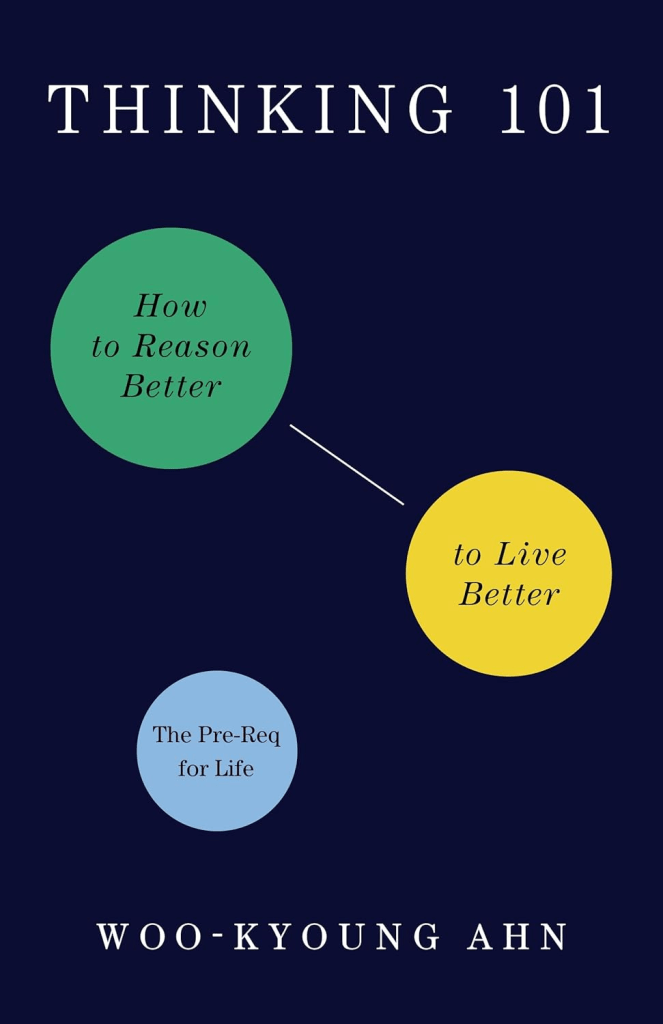
“Why do I make foolish decisions even though I consider myself smart?”
We live in an age of AI, algorithms, endless choices, and infinite information. Yet we still make mistakes, get emotional, and regret decisions. This is not due to ignorance, but because of how the human brain is wired. Yale psychology professor Woo-Kyoung Ahn reveals in 『Thinking 101』 just how often and systematically our thinking goes wrong.
This is not just another psychology book. 『Thinking 101』 is a practical toolbox for thinking better. Ahn’s popular course “Thinking” at Yale uses experiments and interactive exercises to help students experience their cognitive errors, and then apply those insights to real life.
Why You Should Read This Book
- If you’ve ever wondered why smart people still make bad decisions
- If you want to understand how recommendation algorithms distort your perspective
- If you want to question your own thinking and ask better questions
- If you want to become a better leader, parent, or collaborator
『Thinking 101』 is a compelling place to start.
10 Core Ideas Explained with Practical Tips
1. Confirmation Bias
We tend to seek out evidence that confirms what we already believe, while ignoring or dismissing anything that contradicts it. In one classroom experiment, Ahn showed how students kept generating sequences that aligned with their assumptions rather than trying to disprove their hypothesis. This bias makes it harder to change our minds, even when we’re wrong.
Practical Tip:
- Actively look for disconfirming evidence. Ask, “What would prove me wrong?”
- During discussions, challenge your own view before someone else does.
2. Negativity Bias
Negative information sticks with us more than positive feedback, even if the ratio is wildly unbalanced. One bad comment among 99 compliments can ruin your mood. Evolutionarily, this helped us survive, but today it feeds anxiety, overreactions, and poor self-image.
Practical Tip:
- End your day by listing three positive things that happened.
- When facing criticism, zoom out and evaluate it within the broader context.
3. Cognitive Laziness
The brain prefers mental shortcuts to save energy. While efficient, this leads us to rely on habits and automatic responses, making us less creative and more narrow-minded. Algorithms feed on this tendency by showing us only what’s familiar.
Practical Tip:
- Break your daily routine on purpose: take a new route to work or try a new café.
- Resist the “recommended for you” trap. Explore new content manually.
4. Illusion of Fluency
Just because something feels easy to understand doesn’t mean it’s truly understood. Repetition breeds familiarity, not mastery. This illusion makes us overconfident and blinds us to our knowledge gaps.
Practical Tip:
- After learning something, try to explain it out loud or in writing.
- Test yourself with questions like, “Could I teach this to a friend in 2 minutes?”
5. Curse of Knowledge
Once we know something, it’s hard to imagine not knowing it. This makes communication difficult and teaching ineffective. Experts often struggle to simplify information for beginners because they can’t unsee what they already understand.
Practical Tip:
- Use analogies and concrete examples that match your audience’s background.
- After explaining something, ask for feedback to ensure clarity.
6. Attribution Error
We judge others’ actions as reflections of their character, but excuse our own behavior as situational. This double standard fuels misunderstanding and weakens empathy.
Practical Tip:
- When someone frustrates you, ask “What might be going on in their world?”
- Recall moments when you behaved similarly under pressure.
7. Algorithmic Reinforcement
Every click reinforces the kinds of content we’re shown. Over time, our worldview shrinks as algorithms learn to serve us more of the same. This leads to echo chambers and confirmation bubbles.
Practical Tip:
- Intentionally consume opposing views and unfamiliar content.
- Disable autoplay and seek out information beyond your usual feeds.
8. Belief Shapes Emotion
What we believe about ourselves changes how we feel. In a study, participants told they had a “depression gene” later scored higher on mood tests, even though the test was fake. What you believe becomes how you experience the world.
Practical Tip:
- When emotions spike, ask, “Am I reacting to reality or to a belief?”
- Practice daily positive self-affirmations to reshape internal narratives.
9. Creativity Through Randomness
Unpredictable, non-routine experiences stimulate creativity. Comfort zones dull the brain. Small acts of randomness, like ordering a new dish or exploring a new route, can spark new neural connections and ideas.
Practical Tip:
- Assign yourself one random choice per day. Flip a coin to decide lunch.
- Use new tools or formats to approach familiar problems.
10. Metacognition
Thinking about your thinking is the foundation of better decision-making. Without awareness of how you think, it’s impossible to improve your judgments, learning, or emotional control.
Practical Tip:
- At the end of the day, ask “When did I react automatically today?”
- Write out your decision-making steps before committing to a big choice.
How to Apply These Ideas in Daily Life
- Search opposing keywords on Google (e.g., “cataract surgery risks” and “benefits”)
- Choose meals randomly instead of picking the usual
- Change one part of your daily routine every week
- Ask, “What if I’m wrong?” before locking in your opinion
The Core Message
The first step toward smarter thinking is admitting you might be wrong.
『Thinking 101』 is not just about psychology. It is a practical philosophy for modern life. In a world where AI curates your reality for you, this book hands the steering wheel back to your brain.
 Site Title