[AEE] Episode 2533 – What Are You Wishing For Your English?

Refined Daily Expressions & Idioms (with Examples)

  1. “I’m wishing I had…” / “I wish I had…”
    → Used to express regret about a past decision or event.
    • “I’m wishing I had brought a jacket.”
    • “I wish I had grabbed my coat.”
    • Tip: “I’m wishing” is more immediate and emotional, while “I wish” is slightly more general.
  2. “Wishing you…”
    → A formulaic phrase used to offer well wishes in writing.
    • “Wishing you the best on your exam.”
    • “Wishing you a speedy recovery.”
    • Note: This is typically written, not spoken directly.
  3. “I’m wishing for…”
    → Used to express a current desire or hope.
    • “I’m wishing for a hot chocolate right now.”
    • Similar to “I really want…”, but with a softer, more wistful tone.
  4. “It’s not the same.”
    → Casual way to express disappointment or comparison.
    • “It’s not the same without the changing leaves.”
  5. “If you can’t be [doing X], is it really [Y]?”
    → A rhetorical, playful structure for critiquing something humorously.
    • “If you can’t be wearing a sweater, is it really a fall festival?”
  6. “Very typical conversation going in and out of different topics.”
    → Commentary on natural, fluid conversation, useful when teaching or reflecting on dialogue.

🎭 Role Play Script From the Episode

Scene: Two friends at a New England fall festival.

  • Aubrey: I’m wishing I hadn’t worn these shoes. They are not very comfortable.
  • Lindsay: I wish I had grabbed my coat before we left. It’s freezing out here.
  • Aubrey: It is so cold. Honestly, I’m wishing for a hot chocolate right now.
  • Lindsay: Oh, good idea. Let’s see if any of the food trucks have one.
  • Aubrey: By the way, isn’t your interview tomorrow?
  • Lindsay: Yep. 10:00 a.m.
  • Aubrey: Well, wishing you luck. I’m sure you’ll do awesome.

📝 Integrated Paragraph Using All the Expressions

At the fall festival, I was instantly regretting my choice of footwear — I’m wishing I hadn’t worn these shoes, I muttered, shifting my weight from foot to foot. I wish I had brought my coat, too; the chill in the air was biting. As we wandered past booths selling cider donuts and crafts, I sighed, I’m wishing for a hot chocolate right now. The crisp air just begged for something warm. My friend chuckled, agreeing that it’s not the same without the vibrant fall leaves and cozy sweaters — if you can’t be wearing a sweater, is it really a fall festival? she joked. Before we parted, she smiled and said, Wishing you luck on your interview tomorrow — such a thoughtful sendoff that reminded me how small phrases can mean a lot.

Q and A

Q: What does “The chill was biting” mean?

A. It means the cold felt very sharp and uncomfortable — like it was “biting” into your skin. It describes intense, harsh cold.


Q: How does “biting” sound or feel in this context?

A. It doesn’t have a literal sound, but it evokes a sense of something sharp and harsh — like wind slicing through or cold that stings your skin. It’s emotionally sharp, not soft or gentle.


Q: What does “Before we parted” mean?

A. It means “before we said goodbye” or “before we went separate ways.”

  • “Parted” = past tense of “to part,” meaning to leave each other.

Q: What does “The crisp air just begged for something warm” mean?

A. It means the air was cool and refreshing, and it made you really crave something warm — like hot chocolate or a warm coat.

  • “Begged for” = strongly called for (a figurative expression).
[AEE] Episode – Grammar Mistake or False Start?

🔑 Daily Expressions & Phrases from the Episode

Here are refined daily expressions and idioms from the episode that elevate conversational fluency—especially useful for long-term U.S. residents:


1. False start

Meaning: Starting to say something and then changing course mid-sentence.
Why it matters: Recognizing it helps you understand native speech better and sound more natural when speaking.

  • Example:
    “I—I think we should—no, never mind. Let’s go with your plan.”

2. Take a left turn / Take a right turn (in conversation)

Meaning: Change direction or shift the structure of a sentence or thought unexpectedly.
Why it matters: Useful to describe how native speech often flows in real time, not linearly.

  • Example:
    “He started to say he was going to quit, but then he took a left turn and said he just needed a vacation.”

3. Think in real time

Meaning: Forming thoughts and constructing sentences while speaking, not planning every word in advance.
Why it matters: Encourages you to let go of perfection and focus on expressing your thoughts naturally.

  • Example:
    “When you’re thinking in real time, it’s normal to backtrack or pause—it’s part of speaking naturally.”

4. Don’t miss a beat

Meaning: Not getting thrown off or confused by a momentary hesitation or change.
Why it matters: A sign of strong listening skills in everyday, spontaneous speech.

  • Example:
    “Even when she stumbled a bit, I didn’t miss a beat—I knew exactly what she meant.”

5. Pull back (mid-sentence)

Meaning: Stop yourself from finishing a sentence to rephrase or change your thought.
Why it matters: Helps describe natural hesitations without labeling them as “mistakes.”

  • Example:
    “He started to explain, but pulled back and went with a simpler example instead.”

6. Rehearsed vs. real speech

Meaning: Differentiating between scripted/formal speech and natural, spontaneous talk.
Why it matters: Reminds you to focus on real-world input and communication over textbook perfection.

  • Example:
    “Her speech sounded too rehearsed—it didn’t feel like a real conversation.”

7. Break connection

Meaning: To interrupt the flow of a conversation or make someone feel distanced or corrected.
Why it matters: In daily life, focusing on grammar over meaning can harm relationships or conversations.

  • Example:
    “Don’t correct every little mistake—it can break connection.”

🎭 Role Play Script from the Episode

Context: Two friends are planning a party.


Michelle: Can you think of anyone else we need to add to the invite list?

Lindsay: I—not anybody that comes to mind.

Michelle: Okay, sounds good. Do you have any other thoughts on the menu?

Lindsay: I—not really. I think we’re good.


Key Features:

  • Each “I—” is a false start, followed by a corrected sentence.
  • These are natural and unintentional, not grammar errors.
  • They’re common in daily speech and should not be misinterpreted as mistakes.

🧩 Integration Paragraph Using All Expressions

When you’re thinking in real time, it’s completely normal to have a false start—you begin one thought, then suddenly take a left turn mid-sentence. For example, someone might say, “I—uh—not really sure,” which isn’t a grammar mistake but a natural moment where the speaker pulls back to rephrase. Native speakers do this constantly, and most people don’t miss a beat—they stay focused on the meaning, not the structure. This kind of fluid, unrehearsed speech is what real connection is built on. Obsessing over “correctness” can break connection, especially in casual or emotional conversations. So if your sentence doesn’t come out perfectly? Let it go. Focus on being present, not perfect.

[AEE] How to Connect Over a Twist in a Movie

🔑 Key Daily Expressions and Idioms

Here are the refined, natural expressions from the script, perfect for enhancing conversational fluency and connection when discussing entertainment like movies and shows:


1. Keep you guessing

Meaning: To maintain suspense and make you unsure of what will happen next.
Examples:

  • This crime series really kept me guessing until the very end.
  • The plot twists kept me guessing the entire time.

2. Keep you on your toes

Meaning: To keep you alert or constantly paying attention.
Examples:

  • Parenting definitely keeps you on your toes.
  • That show is full of surprises. It keeps me on my toes.

3. A twist

Meaning: An unexpected development in a story.
Examples:

  • There was a huge twist in the last episode. I didn’t see it coming.
  • I love stories with a good twist—they make the whole experience more engaging.

4. I didn’t see it coming

Meaning: The outcome was completely unexpected.
Examples:

  • When the villain turned out to be the hero’s brother, I didn’t see it coming.
  • The ending totally surprised me—I didn’t see it coming at all.

5. Leave you in suspense

Meaning: To make you wait anxiously to know what happens next.
Examples:

  • Every episode ends in a way that leaves you in suspense.
  • The book leaves you in suspense after every chapter.

6. Cliffhanger

Meaning: A dramatic ending that leaves the outcome unresolved, usually prompting you to come back for more.
Examples:

  • They ended the season with a cliffhanger—I can’t wait for the next one.
  • That show is full of cliffhangers, which makes it so addictive.

🎭 Role Play Scene

Scenario: Two friends catching up after watching a suspenseful movie.

A: Hey! So, how was the movie you saw last night?
B: Oh, it was amazing. It kept me on my toes the whole time.
A: Nice! Were there any twists?
B: Huge one. I didn’t see it coming at all. The plot really kept me guessing.
A: Sounds like something that would leave me in suspense.
B: Definitely. Every scene built up to something unexpected.


📝 Example Paragraph Using All Expressions

Last night, I watched a thriller that absolutely kept me guessing from start to finish. Just when I thought I had figured it out, there was a twist that completely changed everything—I didn’t see it coming at all. The pacing was tight, and it kept me on my toes the whole time. By the end, the story left me in suspense, and of course, they wrapped it up with a major cliffhanger. Now I’m counting the days until the next season drops.

🎤 Q&A: After Reading That, You Might Be Wondering…

1. Q: “Until the very end” sounds dramatic. Is it just a fancier way of saying “until the end”?
A: Pretty much, but that little word “very” adds a strong emphasis. It highlights that something continued all the way to the final moment. If you say “until the very end,” you’re not just talking about time passing. You’re stressing that whatever was happening, it never let up for even a second.


2. Q: In the sentence “The plot twists kept me guessing the entire time,” is “the entire time” what I was guessing?
A: No. You’re not guessing the time itself. “The entire time” tells us how long you were in a state of guessing. The object of “kept” is “me,” and “guessing” is the state you’re being kept in. So it means you kept trying to figure things out from beginning to end.


3. Q: But wait, can I say “guess the entire time” if I’m literally trying to figure out how long something will take?
A: Yes, in that case, “the entire time” becomes the object of “guess.” For example, “Can you guess the entire time it’ll take to finish the project?” Here, you’re estimating the total duration. The meaning is different, and it’s perfectly correct.


4. Q: “Cliffhanger” sounds like someone is about to fall off a mountain. Where did that word come from?
A: It actually comes from that exact idea. In the 1800s, serialized novels and early films would end with the hero literally hanging off a cliff. The story would pause right there, making readers or viewers wait until the next installment to find out what happened. That’s how it became a metaphor for any story that ends at a high-tension moment.


5. Q: What’s the deal with “suspense”? How is it different from just being nervous or tense?
A: Suspense is a specific kind of tension. It comes from not knowing what’s going to happen next and caring about the outcome. It’s what keeps you watching, reading, or listening. It’s not just nervous energy, it’s controlled uncertainty that pulls you forward.withholding just enough detail, and pacing are all part of the suspense toolkit — whether in books or at brunch.


[AEE] Episode 2506 – Explain it to Me Like I’m Five How to Ask for a Simple Breakdown in English – Daily Expression

🔑 Refined Daily Expressions & Idioms from the Script

  1. Explain it to me like I’m five (years old)
    Meaning: Break it down in the simplest terms possible.
    Tone: Casual, humorous, and slightly self-deprecating.
    Example:
    “Can you explain quantum computing to me like I’m five?”
    “I don’t get this contract language—explain it to me like I’m five.”
  2. Give me the kindergarten version
    Meaning: Requesting a very simplified version of something.
    Example:
    “This tax stuff is over my head—just give me the kindergarten version.”
  3. Break it down for me
    Meaning: Explain something step by step.
    Example:
    “I don’t understand this process. Can you break it down for me?”
  4. Simplify this for me / Make this super simple
    Meaning: Ask someone to remove jargon and explain it clearly.
    Example:
    “The instructions are confusing—can you simplify them for me?”
  5. Dumb it down for me (use with caution)
    Meaning: Very informal way to say “explain it simply.”
    Contextual Tip: Use this about yourself only to avoid offending others.
    Example:
    “I know this sounds bad, but could you dumb it down for me? I’m totally lost.”
  6. Not in my wheelhouse
    Meaning: Not within one’s area of expertise or familiarity.
    Example:
    “I’d love to help, but finance is not really in my wheelhouse.”
  7. My eyes glazed over
    Meaning: Lost focus or interest, often due to something overly complex.
    Example:
    “He started talking about crypto mining and my eyes just glazed over.”
  8. Staring down (something)
    Meaning: Facing an upcoming event or challenge with tension or anticipation.
    Example:
    “I’m staring down three client meetings tomorrow and a presentation.”
  9. On its face
    Meaning: As something appears at first glance.
    Example:
    “The policy looks fair on its face, but it’s more complicated than that.”

🎭 Role Play Script (from the episode)

Scenario: Two friends are watching a basketball game. One is unfamiliar with the sport.

A: I’ve never really been into basketball.
B: Oh, it’s easy to understand.
A: Okay, but can you explain it to me like I’m five?
B: Sure. So, see those two baskets? Each team tries to get the ball in the other team’s basket. There are five players on each team.
A: Wait, give me the kindergarten version—what do all the positions actually do?
B: Okay. The center is usually the tallest player…
A: Hmm, okay, break it down for me.
B: Right. So, the point guard usually controls the play and…
A: Sorry, this whole thing is not in my wheelhouse at all.
B: No worries! We’ll get through it. Happens to me with football—I just stare down the TV in confusion during Thanksgiving.


🧩 Practice Paragraph Using All Expressions

Lately, I’ve been trying to understand my partner’s job in software engineering, but honestly, it’s just not in my wheelhouse. He started explaining cloud infrastructure the other night and my eyes glazed over within minutes. So I finally said, “Okay, explain it to me like I’m five—what does a server even do?” He laughed and said, “Alright, let me break it down for you.” When that didn’t help, I asked, “Can you give me the kindergarten version?” Even then, I was struggling. “Look,” I said, “I know I sound ridiculous, but can you just dumb it down for me?” Thankfully, he didn’t take it personally. With the holidays coming up, I’m also staring down yet another Thanksgiving filled with football talk, and I’m determined to finally get it. I may need someone to simplify the rules for me, because while football looks straightforward on its face, it’s really not.

[AEE] Episode 2504 – How to Blend Your Social Bubbles in English

🗣️ Refined Daily Expressions & Idioms (with Examples)

1. Blend your social bubbles

Meaning: Bring together people from different parts of your life (work, school, hobbies, etc.).
Example:
“I’m hosting a game night next weekend—I figured it’s time to blend my social bubbles.”


2. Have you guys met? / Have you both met?

Meaning: A casual and easy way to initiate introductions.
Example:
“Oh hey! Have you guys met? This is Jake—he and I work together.”


3. You should talk to [someone]

Meaning: A soft prompt to connect two people who may have something in common.
Example:
You should talk to Rachel—she just got back from Portugal too!”


4. He/She’s the one I was telling you about…

Meaning: Referring back to a previous conversation; a useful intro with context.
Example:
“That’s Sarah—she’s the one I was telling you about who started her own design firm.”


5. I’ve been wanting to introduce you to…

Meaning: Expresses intentionality and builds positive anticipation for the meeting.
Example:
I’ve been wanting to introduce you to Liam—he’s also into photography.”


6. Give them a reason to talk

Meaning: As a host or mutual friend, provide a shared interest to start the conversation.
Example:
“You both love cooking, so I thought you’d hit it off. You both love trying new recipes.”


7. Weak ties

Meaning: Social science term for acquaintances or people one knows casually; often powerful in networking.
Example:
“Surprisingly, I got my job through a weak tie—a friend of a friend I met once at a dinner party.”


8. Off to the races

Meaning: Used informally to describe something that gets going quickly or easily.
Example:
“As soon as I mentioned they both ski, they were off to the races talking about mountain resorts.”


🎭 Role Play Script: Birthday Party Introduction

Setting: A birthday party. Lindsay (host) sees her friend Aubrey talking with her, and another friend, Mark, arrives.


Lindsay: Oh hey Mark! Glad you made it.
(turns to Aubrey) Have you guys met? This is Mark. He and I know each other from running club.

Aubrey: No, I don’t think we’ve met. Hi!

Mark: Hi, nice to meet you.

Lindsay: Aubrey and I are college friends. Actually, you guys have a lot in common—you both rock climb.

Mark: That’s awesome. Where do you climb?

Aubrey: Mostly at Phoenix on the Rocks, but I boulder outside sometimes. What about you?

Mark: I love Phoenix on the Rocks! You’ll have to tell me about your bouldering spots—I don’t know many.

Lindsay: Oh, and Aubrey—Mark’s the one I was telling you about who writes for The New Yorker.

Aubrey: Oh wow—I’ve been wanting to meet you. Lindsay mentioned your articles!


📝 Integrated Paragraph Using All Expressions

Last weekend, I hosted a fall-themed dinner party and decided it was time to blend my social bubbles. I had friends from work, my hiking group, and my writing class all under one roof. As soon as people started arriving, I went into host mode—“Have you guys met?” became my go-to line. At one point, I spotted Tara and Nia standing near the fireplace, so I said, “You should talk to each other—you both just got back from Iceland!” Later, when Mike showed up, I smiled and said, “Oh, he’s the one I was telling you about who just opened a coffee shop downtown.” I walked him over to Jenny, saying, “I’ve been wanting to introduce you to Jenny—she roasts her own beans at home.” Moments later, they were deep in conversation, totally off to the races. It was a perfect reminder of how valuable those weak ties can be—for new friendships, fresh ideas, and maybe even future collaborations.

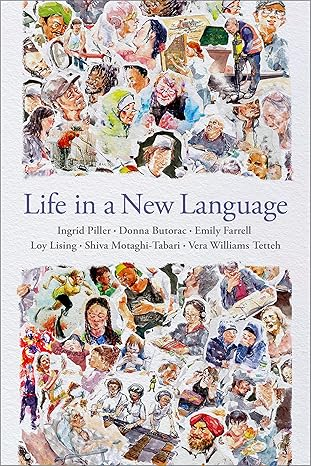
[AEE] Episode 2503: 3 Powerful Tips for Thriving in a New Language by Ingrid Piller

Whether you’re starting over in a new country or learning a language for daily life, Ingrid Piller, author of Life in a New Language, shares three essential insights from her decades of research with immigrants.

These are not your usual grammar tips. These are life strategies for real-world language growth.


1. Learning a Language Means Becoming a New Version of Yourself

“It’s not just about language. It’s about becoming a new person.”

📌 What It Means: Language learning is not only about passing tests like IELTS or TOEFL. It is about creating a new identity in a new culture, with new ways of thinking and interacting.

How to Use It:

  • Be open to change in how you express yourself and how others see you.
  • Understand that your personality might shift when speaking a new language.
  • Don’t try to keep everything the same. Growth is part of the process.

💬 Try This: Think about how your voice or humor changes in your new language. Accept it as part of who you are becoming.


2. Step Outside Your Comfort Zone and Talk to People

“You have to put yourself out there. Even if it’s awkward.”

📌 What It Means: You can’t learn to speak well by staying silent or relying only on language apps. Real conversation is where the real learning happens.

How to Use It:

  • Make small talk at the grocery store or while waiting for the bus.
  • Don’t worry about mistakes. Focus on the connection.
  • Build casual friendships with people who will talk to you regularly.

💬 Try This: Make it a habit to speak with one new person each day, even if it’s just a quick hello or comment.


3. Be Patient. Fluency and Belonging Take Time

“You’re playing a long-term game.”

📌 What It Means: Language confidence and feeling at home won’t happen right away. They build slowly, through daily effort and time.

How to Use It:

  • Give yourself permission to be a beginner.
  • Know that even advanced speakers still learn new things.
  • Focus on the relationships you are building, not just the grammar.

💬 Try This: Keep a language journal where you note your progress each week. Celebrate small wins.


🎯 Final Thought: Connection Is More Important Than Perfection

Ingrid Piller’s research reminds us that learning a new language is not just about speaking correctly. It is about creating a new life. That means finding your voice, your people, and your place in a new world.

If you’re learning a language today, be kind to yourself. You are not just learning new words. You are building a new version of your life.

🌟 Refined Daily Expressions & Idioms with Examples

These expressions from the script can elevate your real-world communication, especially for immigrants or long-term residents dealing with identity, communication, and belonging.

1. Put yourself out there

Meaning: To take risks socially, even if it feels uncomfortable or intimidating.
Example: “If you want to make new friends in your new country, you have to put yourself out there.”

2. Cold shoulder

Meaning: To be ignored or treated with indifference.
Example: “Sometimes when I try to talk to someone in English, I get the cold shoulder.”

3. Growing pains

Meaning: The difficulties experienced in the process of change or growth.
Example: “Learning a new language as an adult comes with growing pains, but it’s part of the process.”

4. Set yourself up for success

Meaning: To take actions that increase your chances of achieving your goals.
Example: “Immersing yourself in the local culture can really set you up for success.”

5. A sense of belonging

Meaning: Feeling accepted and connected to a group or place.
Example: “It took time, but I eventually found a sense of belonging in my new city.”

6. Play the long-term game

Meaning: To have a long-term perspective and patience in pursuing goals.
Example: “You’re playing a long-term game with language learning—it’s not going to happen overnight.”

7. Strike up a conversation

Meaning: To start a conversation, often with a stranger.
Example: “I tried to strike up a conversation while waiting for coffee.”

8. Stand out

Meaning: To be noticeably different.
Example: “Even after years in the country, my accent makes me stand out.”

9. Under siege

Meaning: Feeling constantly attacked or pressured.
Example: “Some migrants feel under siege when they’re frequently questioned about their origins.”

10. Get comfortable in a new language

Meaning: To feel confident and natural using the language in daily life.
Example: “It took years, but I finally got comfortable in my new language.”


🎭 Role Play Script

Here’s a short role play using expressions from the interview:


Characters:

  • Elena – A newcomer from Spain, recently moved to the U.S.
  • Maya – A long-term resident who immigrated from India 10 years ago.

Elena: Honestly, Maya, I thought I was ready. I’ve studied English for years. But out here… I don’t know. I feel like I stand out everywhere I go.
Maya: I totally get it. I went through the same thing. It takes time to get comfortable in a new language.
Elena: It’s not just the language. It’s like… I’m becoming a different person.
Maya: Exactly. You’re creating a new identity. And remember, you’re playing the long-term game here.
Elena: Still, sometimes I try to strike up a conversation and get the cold shoulder.
Maya: Oh yeah, that happens. But don’t take it personally. You’ve got to put yourself out there. The growing pains are real, but they pass.
Elena: I guess I just need to focus on building a sense of belonging.
Maya: Absolutely. Connect with people, even small chats at the store. Those water-cooler moments matter. Set yourself up for success by being present—even if it’s uncomfortable at first.
Elena: Thanks, Maya. You made me feel less alone.
Maya: You’re not under siege, Elena. You’re on your journey—and you’ve got this.


📝 Paragraph Using All the Expressions

Moving to a new country means playing the long-term game. It’s not just about mastering grammar—it’s about building a new identity and getting comfortable in a new language. There will be growing pains, like the awkward moments when you strike up a conversation and receive the cold shoulder. But to set yourself up for success, you need to put yourself out there. It’s natural to stand out at first, and sometimes that might make you feel under siege, especially if people constantly ask, “Where are you from?” Yet over time, by embracing those challenges and connecting with others, you’ll build a sense of belonging that makes all the effort worthwhile.