What The Psychology of Money reveals about the moment wealth becomes something deeper
When people do not have enough money, they change all the time.
They take work they do not want.
They stay in relationships they have outgrown.
They give away their time too cheaply.
They bend, compromise, and adjust, not because they are weak, but because survival comes first.
That is why money pressure changes people.
But at a certain point, something interesting happens.
Some people make more money and become even more restless.
Others make more money and become harder to move.
They stop changing for money.
And I think that is where real wealth begins.
Not when someone earns more.
Not when someone buys more.
Not when someone looks successful from the outside.
Real wealth begins when a person no longer has to sell their values to improve their income.
When they can say no to opportunities that violate their peace.
When more money no longer has the power to redesign who they are.
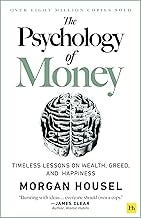
That is the kind of idea Morgan Housel explores in The Psychology of Money.
The book is not really about spreadsheets, investing tricks, or financial hacks. It is about behavior. About emotions. About why people with the same amount of information can make completely different money decisions. And more importantly, it is about a deeper question:
What is wealth actually for?
A few chapters in particular help answer that question in a powerful way.
1. Getting rich and staying rich are not the same thing
One of the strongest ideas in The Psychology of Money is that making money and keeping money require very different skills.
A lot of people know how to climb.
Very few know when to stop climbing.
That is an uncomfortable truth, especially in a culture that celebrates constant expansion. We admire growth, speed, ambition, and visible success. We assume the person moving fastest must be winning.
But wealth is not only built by acceleration.
It is also protected by restraint.
The truly wealthy person is not always the one who grabs every opportunity. Sometimes it is the one who knows which opportunity is too expensive, even when it pays well.
That kind of judgment changes everything.
Because once you have something to protect, the question is no longer, “How much more can I gain?”
It becomes, “What am I not willing to lose?”
My health.
My sleep.
My time.
My ability to make decisions without desperation.
My relationships.
My sense of self.
This is where the definition of wealth starts to mature.
A poor person often has to ask, “What can I do to survive?”
A wealthy person, in the deepest sense, asks, “What do I now have the privilege to protect?”
That is why staying rich is more philosophical than people think. It is not just about avoiding bad investments. It is about refusing to trade away your life for numbers that no longer change your quality of life.
2. The most important kind of wealth is invisible
We live in a world that confuses wealth with proof.
A luxury car.
A large house.
A watch people notice.
A lifestyle that photographs well.
But Housel makes an important distinction: what people often call wealth is usually just spending.
Real wealth is what you do not see.
It is the money that has not been spent.
The pressure you do not feel.
The options you have not been forced to give up.
The freedom to walk away.
The ability to say, “No, that is not worth my peace.”
Invisible wealth does not perform well on social media.
It is hard to show.
Hard to measure.
Hard to impress people with.
But it may be the only kind that truly matters.
Someone can look rich and still be trapped.
Another person can live quietly and be profoundly free.
So who is wealthier?
That question exposes how shallow most money conversations are.
Because the real power of money is not in what it lets you display.
It is in what it lets you avoid.
Avoid panic.
Avoid dependency.
Avoid humiliation.
Avoid saying yes when your soul wants to say no.
That is why wealth should not be defined by what you own, but by what you no longer have to tolerate.
At some point, the richest life is not the loudest one.
It is the one with the most choice.
3. Only people who know what “enough” means can stay free
This may be the quietest lesson in the book, but it might also be the most important.
Many financial problems do not come from having too little.
They come from never knowing when you have enough.
That is the dangerous part.
Because “more” has no finish line.
A little more income.
A little more status.
A little more upside.
A little more proof that you are doing better than the people around you.
And once comparison enters the room, contentment leaves through the back door.
Yesterday’s success becomes today’s insecurity.
Yesterday’s comfort becomes today’s embarrassment.
Yesterday’s dream becomes today’s baseline.
This is how people become richer and more anxious at the same time.
The money grows.
The peace does not.
Why?
Because without a definition of enough, wealth has no center. It only has momentum.
And momentum is dangerous when it is driven by comparison.
A person who does not know what enough looks like will keep trading away calm for growth. They will keep raising the price of satisfaction. They will keep moving the goalpost until even abundance feels emotionally poor.
But someone who knows what enough means becomes harder to control.
They do not have to chase every opportunity.
They do not have to win every comparison.
They do not have to reorganize their life every time the market rewards excess.
This is not laziness.
It is not fear.
It is clarity.
Their methods may change.
Their strategy may evolve.
But their center does not move.
And maybe that is what people really mean when they say the truly wealthy stop changing.
They still adapt.
They still learn.
They still grow.
But they stop being available for every price.
4. Wealth is not money alone. It is order
We often say, “If I had more money, I would be free.”
That is partly true.
But money without inner order does not create freedom. It only amplifies confusion.
If you have no standards, more money gives you more ways to betray yourself.
If you are ruled by comparison, more money gives you a bigger stage for insecurity.
If you cannot protect your time, more money can still leave your life in someone else’s hands.
So wealth is not completed by accumulation.
It is completed by structure.
By knowing what matters.
By deciding what you refuse to sacrifice.
By building a life where money supports your values instead of replacing them.
That is why I have started to think about wealth differently.
A wealthy person is not simply someone with a high net worth.
A wealthy person is someone whose life is no longer easily pushed around by money.
Someone who can earn more without becoming greedier.
Someone who can succeed more without becoming louder.
Someone who can afford more without needing to prove more.
Someone whose peace does not go up for sale every time a bigger number appears.
That is a much rarer kind of wealth.
And a much more beautiful one.
A better definition of wealth
I used to think wealth was about size.
How much.
How fast.
How visible.
How impressive.
Now I think it is about stability.
Wealth is the moment when money stops being the thing that constantly rearranges your character.
It is when your values survive success.
When your schedule reflects your priorities.
When your relationships are not sacrificed for status.
When you can turn down what looks good because it costs too much internally.
So maybe the real wealthy are not the people who can buy anything.
Maybe they are the people who have finally decided what they will never sell.
Their peace.
Their time.
Their dignity.
Their health.
Their inner pace.
Their right to live by their own standards.
That kind of person may not always look rich from a distance.
But up close, they have something far more powerful than display.
They have a life that no longer bends so easily.
And that may be the clearest sign of wealth there is.
 Site Title