A Deep Dive into Brain Rules (With Extra Focus on Exercise & Emotion)
What if I told you that the reason you forget things…
struggle to focus…
or feel mentally foggy…
…is not because you’re lazy?
It’s because your brain is running ancient software in a modern world.
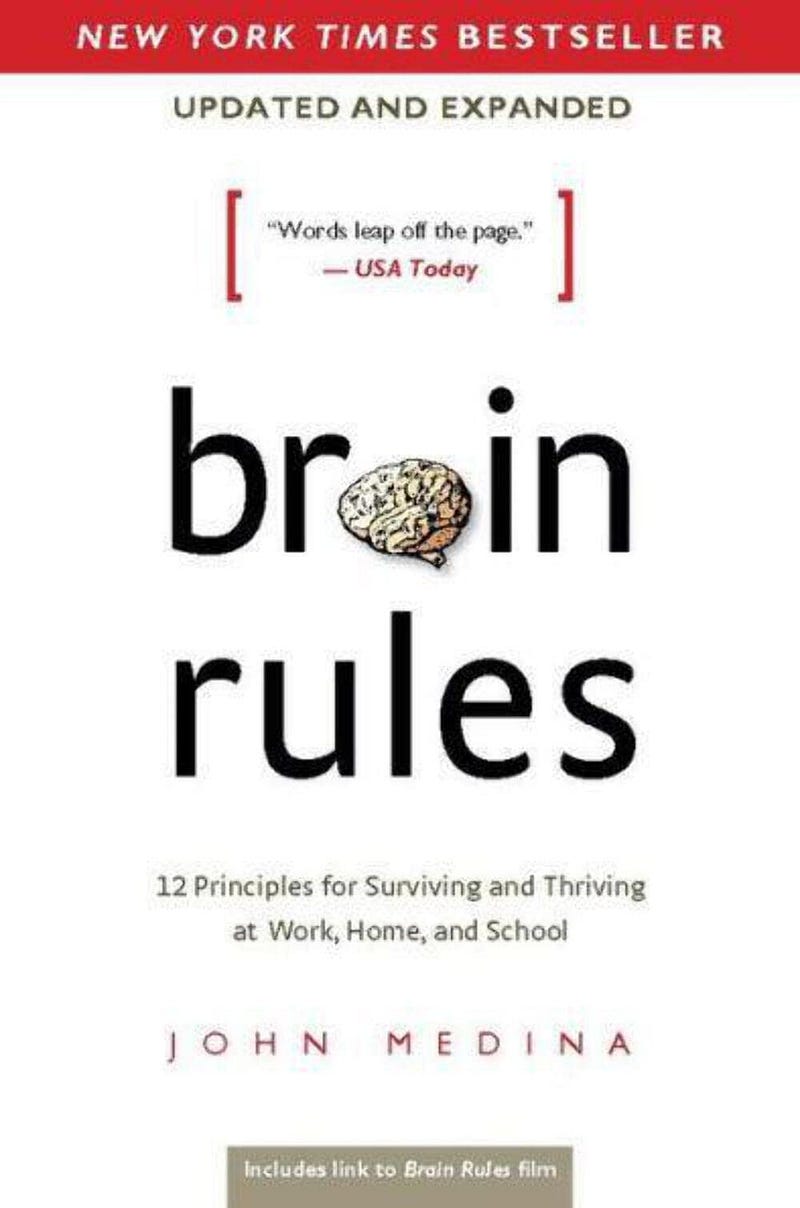
In Brain Rules, molecular biologist John Medina explains 12 simple principles about how our brains actually work.
Let’s dive in.
🏃 Rule #1: Exercise Boosts Brain Power (More Than Studying Does)
Here’s the shocking truth:
If you want to improve learning, the first thing you should do isn’t study — it’s move.
Why Movement Matters
For most of human history, we were constantly moving.
Hunting. Gathering. Walking 10–20 km per day.
Our brains evolved while our bodies were in motion.
Sitting 8 hours a day?
That’s biologically unnatural.
When you exercise — especially aerobic exercise — three powerful things happen:
1️⃣ Oxygen Floods the Brain
More blood flow = more oxygen = better cognitive performance.
2️⃣ BDNF Is Released (Your Brain’s Fertilizer)
Exercise increases Brain-Derived Neurotrophic Factor (BDNF).
Think of it as Miracle-Gro for neurons.
It:
- Strengthens existing brain cells
- Encourages new neural connections
- Protects against cognitive decline
3️⃣ Executive Function Improves
Studies show regular exercise improves:
- Planning
- Focus
- Working memory
- Decision-making
In some experiments, physically active employees outperformed sedentary colleagues in productivity and problem-solving.
That’s not motivational talk. That’s biology.
How Much Exercise Is Enough?
You don’t need to become a marathon runner.
Medina suggests:
- 20–30 minutes of aerobic activity
- 3–5 times per week
Even a brisk walk before studying can significantly improve retention.
Practical Application
Before:
- An exam
- A presentation
- A deep work session
👉 Take a 20-minute walk.
You’re not wasting time.
You’re upgrading your brain.
🚫 Rule #2: Multitasking Is a Myth
Your brain cannot process two high-level tasks simultaneously.
It switches.
And every switch has a cost.
Each interruption:
- Increases error rates
- Reduces speed
- Decreases retention
After checking an email, it can take up to 20 minutes to regain deep focus.
Multitasking isn’t productivity.
It’s controlled distraction.
💓 Rule #4: Emotion Drives Attention — and Attention Drives Memory
Here’s a powerful idea:
We don’t remember information.
We remember what made us feel something.
Why do you remember:
- Your first heartbreak?
- An embarrassing moment in school?
- A terrifying near-miss in traffic?
Because emotion activates the amygdala, which signals:
“This matters. Save it.”
Without emotion, information often never makes it into long-term memory.
The Brain’s Emotional Tagging System
When something triggers:
- Fear
- Joy
- Surprise
- Curiosity
- Anger
The brain releases stress hormones (in moderate amounts) that strengthen memory consolidation.
Emotion → Attention
Attention → Encoding
Encoding → Memory
No emotion?
No attention.
No attention?
No memory.
What This Means for Learning
Most classrooms fail because they deliver information without emotional engagement.
But storytelling works.
Why?
Because stories:
- Create tension
- Build anticipation
- Trigger empathy
- Activate imagery
All emotional processes.
That’s why you can forget 90% of a lecture —
but remember a single powerful story for years.
How to Use This Rule in Real Life
📚 If You’re Studying:
- Turn facts into mini-stories
- Attach absurd images to concepts
- Ask: “Why does this matter?”
🎤 If You’re Teaching:
- Start with a hook
- Use personal experiences
- Create suspense
💼 If You’re Leading:
- Don’t present data.
- Present impact.
Emotion is not the enemy of logic.
It is the gateway to memory.
🧩 Final Thought: Your Brain Has Rules
It thrives on:
- Movement
- Focus
- Emotional engagement
- Repetition
But our modern systems often ignore these rules.
We sit too long.
We multitask too much.
We present information without meaning.
And then we wonder why we forget.
5-Minute Takeaway
If you do only two things after reading this:
1️⃣ Move before you think.
4️⃣ Feel before you memorize.
Your brain will thank you.
 Site Title